
Sitting on my workbench right now is a mortise chisel with an edge that holds sharp through three hours of serious work. Six months ago, that same tool would go dull in under an hour. The only thing that changed wasn’t the chisel—it was how I learned to sharpen it. That difference is visible in the bevel, and it’s real.
The straightforward answer isn’t yes or no—it hinges on what you’re sharpening and how much precision you’re after. That said, if maintaining sharp tools is something you take seriously in your workspace, a honing guide removes obstacles you might not even recognize exist yet.
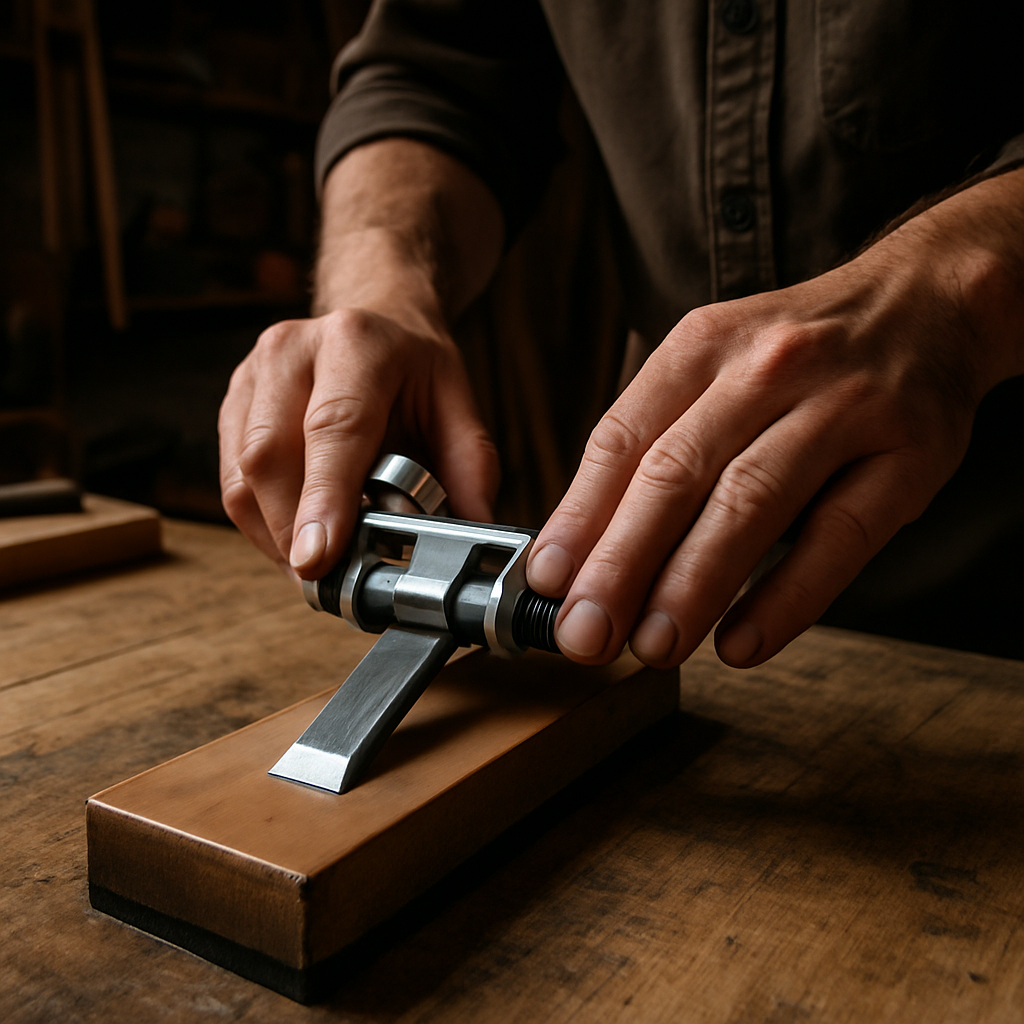
How I Talked Myself Out of Using One
Back when I was cutting my teeth in other people’s shops, the sharpenings I watched were always the same: stones, blades, and hands that knew their angle through pure repetition. Nobody needed extra equipment. That became my template. Twelve years into running my own two-car garage setup, I doubled down on freehand work because it felt like the legitimate approach—more honest, more skilled, more real.
The truth was simpler than my ego wanted to admit: I wasn’t very good at it, and I kept making excuses. Tools would get dull after a few months, and I’d spend half an hour at the stone, never quite applying the same pressure twice, my wrist angling differently with each stroke. The blade would work afterward, but it lost its edge faster than it should have. I’d blame the quality of the stones, the hardness of the metal, humidity in the garage—anything except my own inconsistency.
What was actually happening: I was grinding edges that weren’t true. A sharp chisel depends on both its primary and secondary bevels staying flat and aligned. Mine were all over the place.
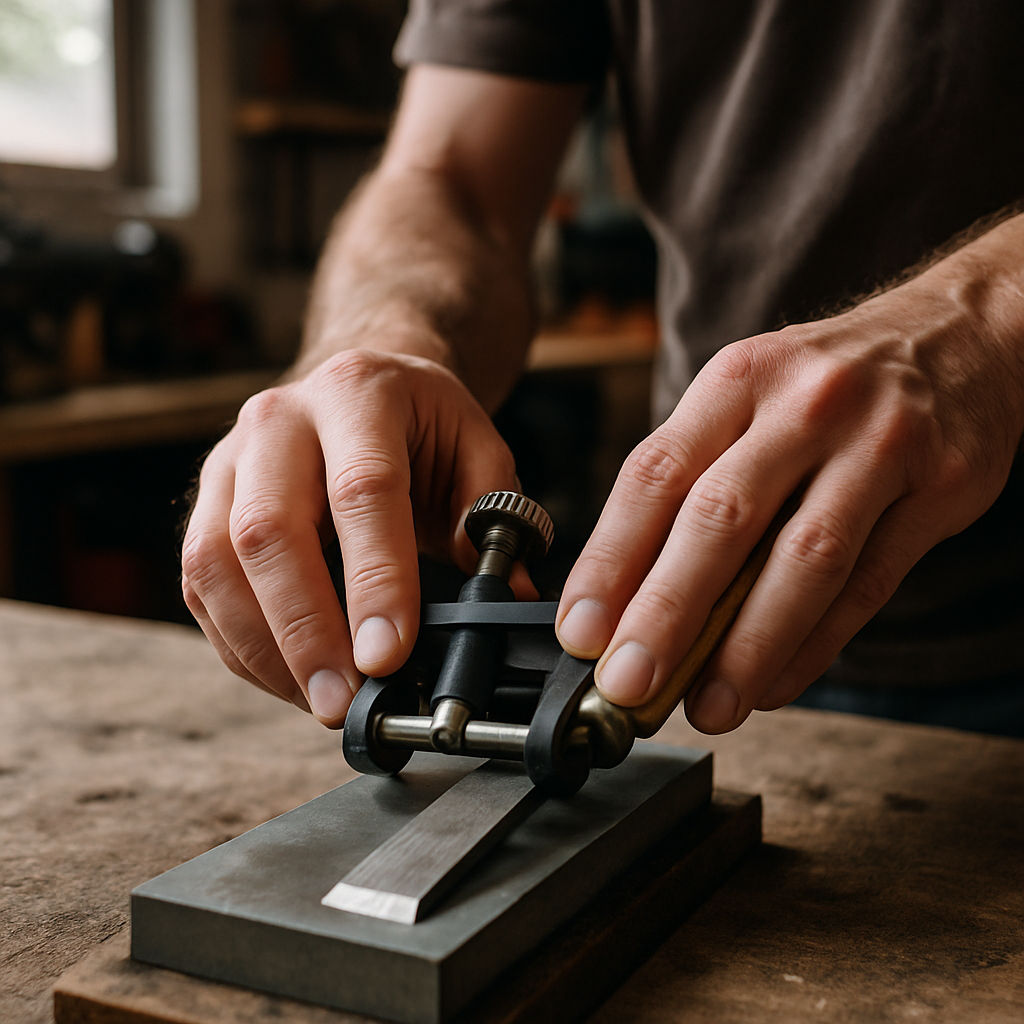
The Project That Made It Obvious
One February I bought a big batch of old Marples and Sorby chisels at an estate liquidation—must have been thirty pieces across different widths, all pretty worn down. Restoration work stretched across the winter, no deadline hanging over it. Just me, my stones, and plenty of time to think.
Around the midpoint, curiosity got the better of me. I grabbed a machinist’s protractor and started measuring the actual bevels coming off my stone work. Reality was harsh. That 1-inch paring chisel? Between 25 and 28 degrees on one half, jumping to 32 on the other. A wider mortise chisel sat at 24 on the left side, 29 on the right. Call it what you want—I wasn’t close.
Worse still, these edges weren’t persisting. Sharpen one, use it for mortising, and by forty-five minutes it was noticeably dull again. That timeframe was too short by half.
That’s when a neighbor loaned me his Eclipse-style honing guide, and I ran one of the remaining chisels through it.
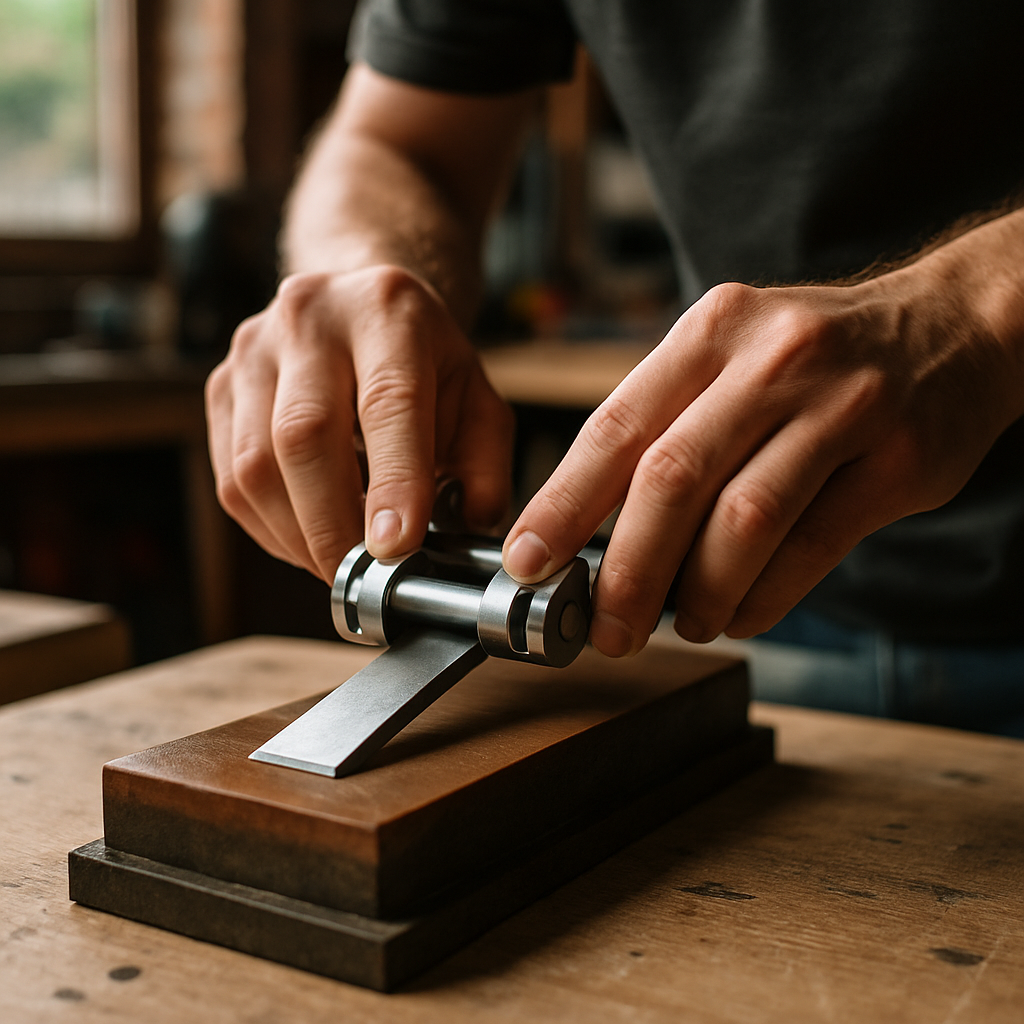
What Shifted When the Guide Entered the Picture
Repeatability jumped to the front immediately. Lock the blade in at 30 degrees—I dialed it once and never touched it—and every pass across the stone hits the exact same angle. No wrist flex, no sliding bevel angle, no guesswork. That secondary bevel wasn’t drifting anymore; it was genuinely secondary.
Those restored chisels now turned in two to three hours of demanding use before they needed stropping or re-honing. That’s tangible. Not earth-shattering, but impossible to ignore.
Then came the speed surprise. I’d expected the guide to slow me down—more setup, more fiddling. Instead, the opposite unfolded. Angle locked, I stopped thinking and started moving. The blade just rode the stone, back and forth, no mental overhead. Ten chisels that would’ve consumed most of a weekend freehand took maybe four hours total, and they emerged genuinely sharp.
By chisel number thirty, my resistance had collapsed. The honing guide wasn’t a shortcut or a band-aid. It was gear that addressed the actual problem—holding an angle steady across multiple strokes without your body overthinking it.
Where It Falls Short and When Freehand Still Makes Sense
I won’t pretend the thing’s a Swiss Army knife. Legitimate drawbacks exist, and certain jobs still send me to the stone unguided.
For starters, guides demand extra steps. Clamping the blade, setting the angle, confirming it seats flat in the apparatus. On a minor refresh—stropping an edge that’s just lost a hair of keenness but doesn’t need actual re-beveling—that overhead stings. I still touch up plane blades without a guide because my stones sit three feet away and the guide lives in a cabinet. Quick hone on the 8000 grit? Freehand wins by default.
Straight edges are where guides really work. Anything curved, hooked, or asymmetrical? You’re either adapting your technique or ditching the guide anyway. Not a showstopper, just a boundary.
Some tools resist the standard guide format too. I’ve got a set of antique Japanese paring chisels that barely cooperate with a typical Eclipse clamp. Thin stock, short profile. Those get freehand treatment by necessity, not choice.
But for the backbone of my workshop—rotating chisels, plane irons, mortising blades that earn their upkeep—a honing guide delivers reliability. Reliability translates to edges that don’t quit prematurely.
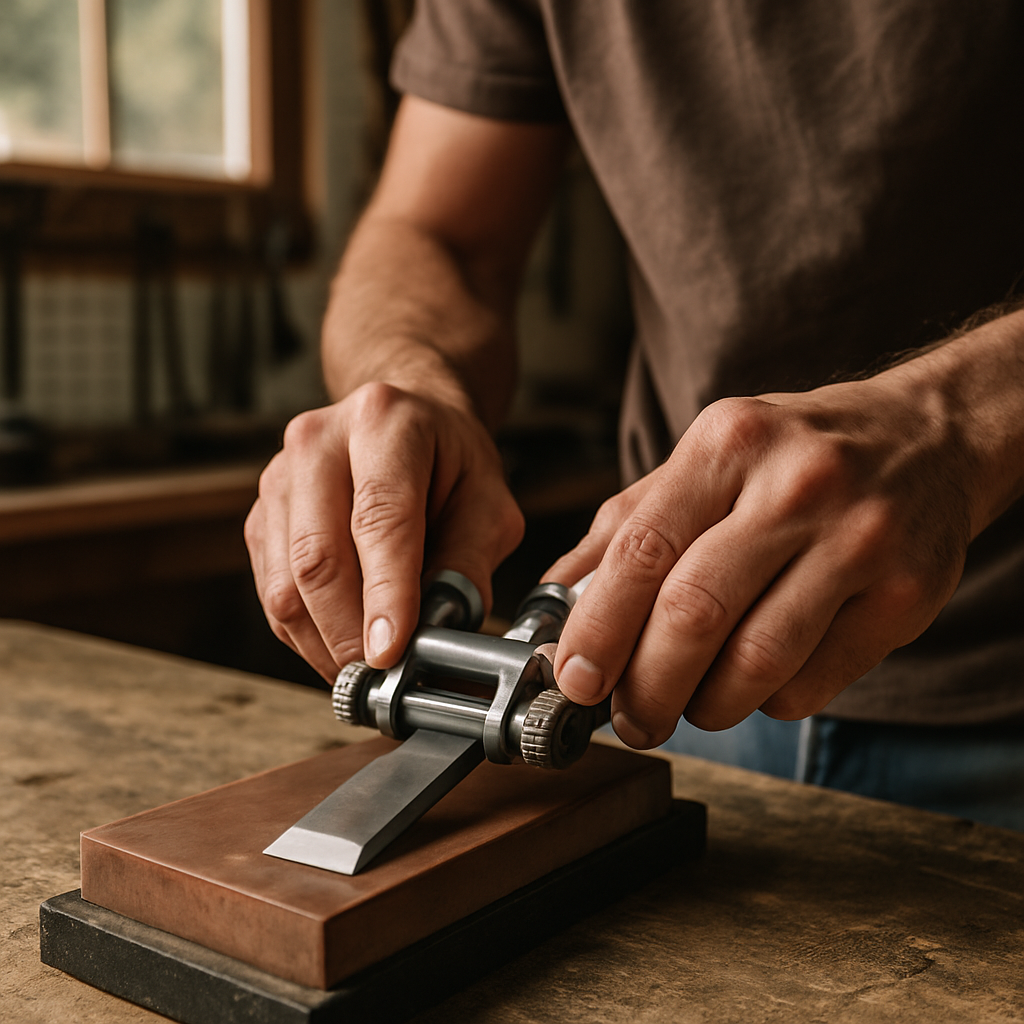
What I’d Actually Tell You to Do
If you’re wrestling with this question right now, here’s my move: Try freehand first if it appeals to you. Learn what the angle feels like in your hand, absorb how pressure affects the bevel, build that tactile understanding. It’s not wasted effort. But when you notice tools need stropping twice a week, or when sharpening sessions leave you frustrated because nothing stays keen long enough, grab a guide and test it on a blade you’re willing to sacrifice. Fifteen or twenty minutes per tool—one pass with the guide, one pass without. Your own experience will tell you whether locked-in angles matter for what you do.
Most garage shops with decent iron that needs to stay functional? Yeah, a honing guide probably belongs in your rotation. Not because free-hand honing is impossible, but because a guide erases the variable that trips most of us up—maintaining rock-solid angle consistency without burning mental energy on it. That’s not settling for less skill. That’s picking the right tool for the job.
I resisted for over a decade. The only thing I regret now is how long I held out.