
My neighbor stopped by the garage last month and asked why I was spending ten minutes touching up a chisel when I could just grab a sharper one from the bin. It’s a fair question—one I would’ve asked myself years ago. But the answer is exactly why I built a dedicated sharpening station, even though floor space in a two-car garage is something I’m constantly fighting for. That small corner setup has fundamentally changed how I work, and it’s the kind of decision that compounds in your favor over months and years.
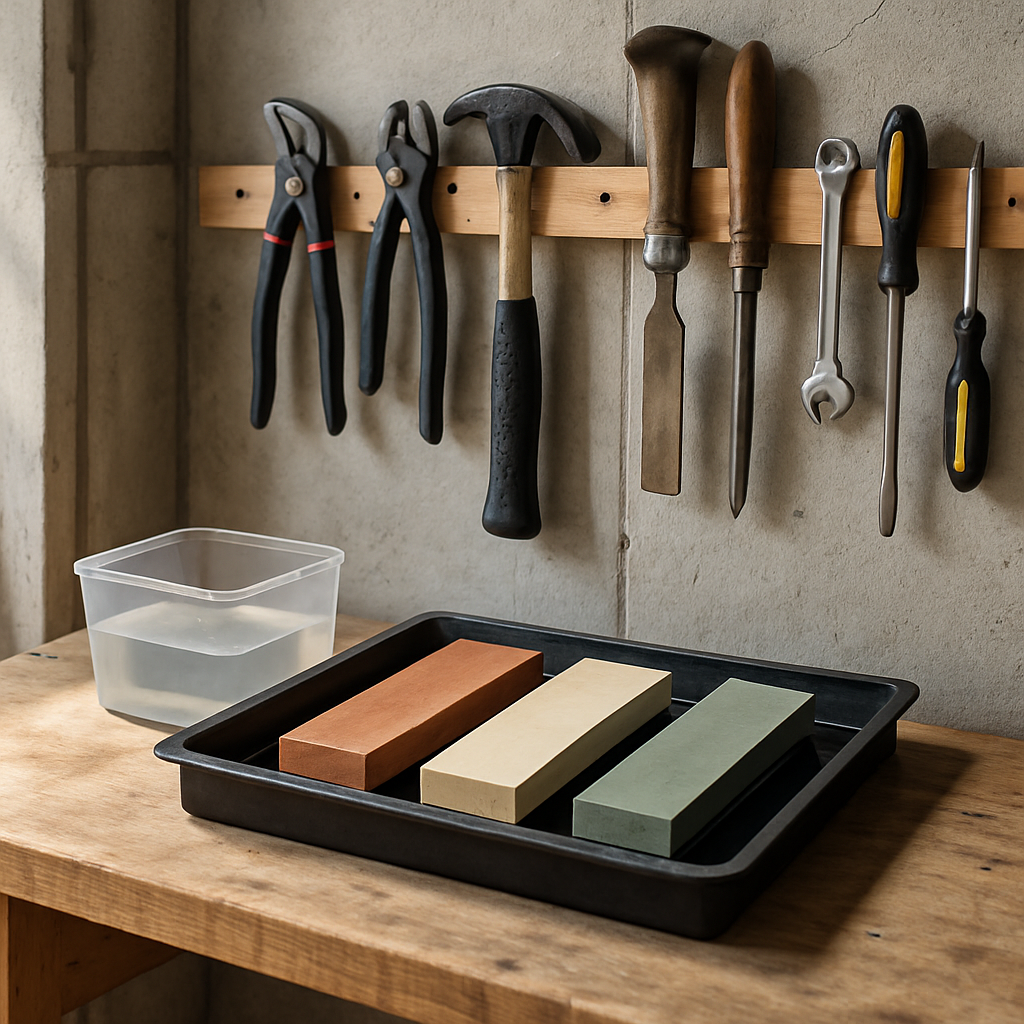
The shift is straightforward but significant. When your sharpening tools live in a dedicated location—visible, ready, and within arm’s reach—you reach for them. When they’re scattered in a drawer or stashed on a shelf somewhere, you don’t. And tools that aren’t sharp cost you in every conceivable way: slower cuts, sloppier joinery, higher risk of slipping, and the creeping frustration that kills momentum on a project. I’ve learned this through countless hours of fighting dull edges, and I’m going to show you exactly how I solved it with a minimal footprint that works in a genuinely cramped space.
Why Having a Dedicated Sharpening Spot Changes Everything
In those early years, my sharpening “setup” was basically chaos. A stone on a towel, tools scattered wherever, nothing organized, nothing ready. The friction cost was real: find the stone, clear space on the bench, hunt down the oil or water, wait for the stone to settle, and only then could you actually start sharpening. By that point, I’d already lost interest. So I’d just keep working with increasingly dull edges—a plane iron that barely bites into grain, a saw that wanders through the cut, a drill bit that smokes instead of drilling.
The hidden expenses add up fast. You’re not losing time just to sharpening delays; you’re losing time fighting the tool itself. Dull edges demand muscle, which invites mistakes. Dull edges heat up the wood. Dull edges turn straightforward cuts into battles. And all of that friction compounds across a project—what should take an hour stretches into three because you’re constantly fighting your own tools.
The moment I relocated my sharpening gear to a small wall-mounted shelf at the back of my shop, everything shifted. No clearing required. No hunting. Just walk over, grab what’s dull, sharpen it in under ten minutes, and move on. The barrier to maintenance dropped to almost nothing, which meant sharp edges stopped being something I did once a year and became something I actually maintained.
Footprint First: Designing for Constraint, Not Abundance
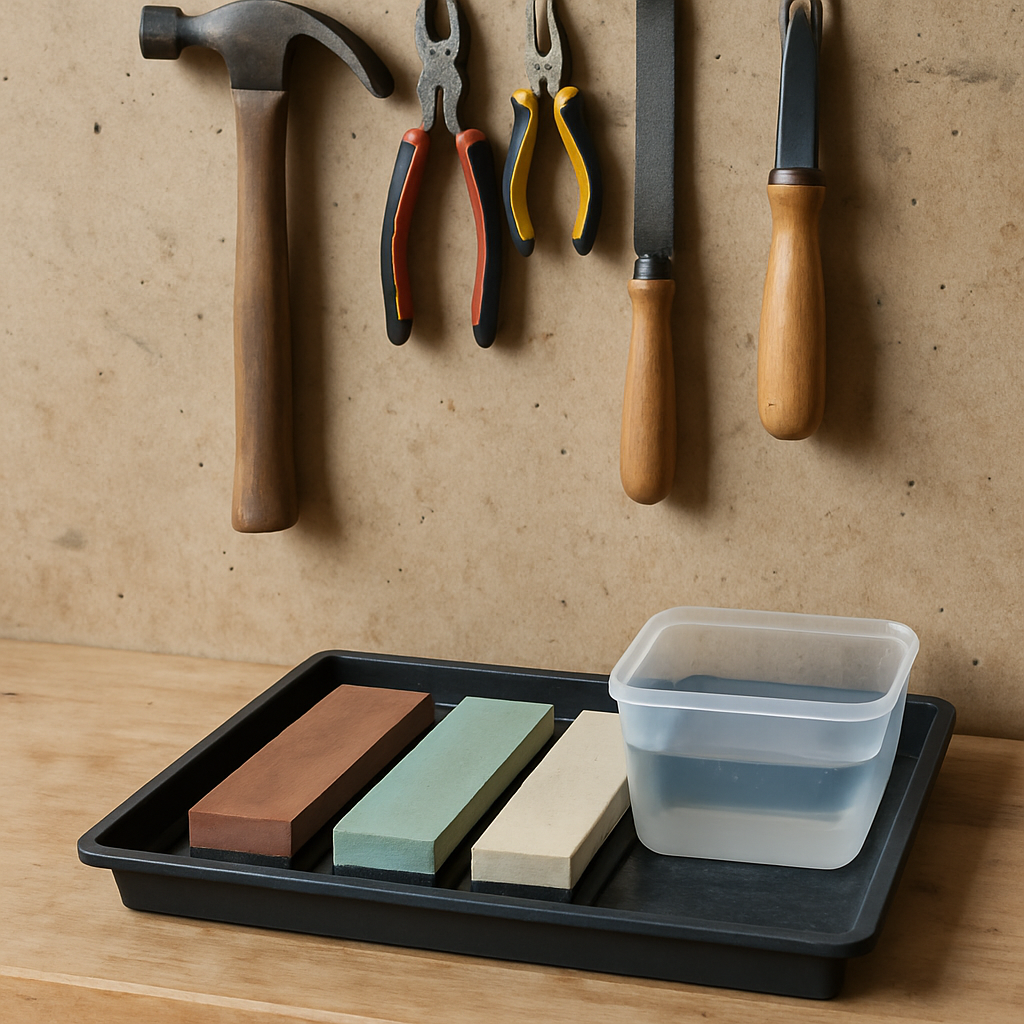
The thing about small shops is that every inch carries weight. You can’t justify sprawling out. My station occupies roughly 24 inches of wall width and 18 inches of depth—basically a modest shelf footprint. That constraint forced me to think ruthlessly about what actually belongs there, which turned out to be the best design decision I could’ve made. Smaller stations are faster to organize, faster to navigate, and psychologically easier to maintain than elaborate rigs with a dozen different stones and accessory tools.
The three non-negotiable qualities: it needs to be within reach without moving anything, it needs to stay stable when you’re applying pressure to a stone, and it has to stay yours—not borrowed for other tasks, not encroached on by project clutter. If your station doubles as storage for random hardware or gets buried under work-in-progress sketches, it stops serving its actual purpose.
For my setup, I mounted a 24″ × 18″ shelf on the wall at elbow height—about 36 inches from the floor—secured with heavy-duty brackets. I glued down a strip of neoprene rubber to prevent stones from migrating, then added a wall-mounted bin directly above for storing my honing compounds, extra fabric, and small supplies. Everything is within twelve inches of where I’m standing. Everything has a home.
What Gear Actually Belongs Here
Sharpening rabbit holes are real. I’ve seen elaborate setups with fifteen different grades of stone, precision jigs, complicated clamps, and honestly most of it never gets touched in an actual working shop. The path I’ve taken is deliberately simpler: just enough to handle real work, nothing that creates mental friction when you’re reaching for something to sharpen.
- Dual-grit water stone (1000/6000). This is your workhorse. The coarser side brings back badly dulled edges or fixes damage; the finer side polishes everything to a working edge. A solid 6″ × 2″ stone costs between $30 and $50, takes almost no space, and will outlast a decade of regular use. I’ve gone through a few in twelve years and never regretted the investment.
- Conditioning fluid or oil. Water stones need water; oil stones need oil. I use a simple spray bottle for water stones because it’s compact and doesn’t spill. If you go the oil route, a squeeze bottle does the same job. Either way, it’s sitting right next to your stone.
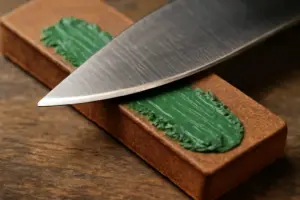
- Strop with compound. This isn’t mandatory, but it’s genuinely cheap insurance. A six-inch leather strop mounted on a scrap block of oak extends the time between full sharpenings and polishes an edge to a finer finish in about thirty seconds. I made mine from scraps and it’s been sitting there untouched for years, working perfectly whenever I grab it.
- Absorbent cloth or rag. For cleaning stone surface, drying tool steel, wiping off metallurgic particles, soaking up spills. A microfiber cloth or old cotton towel takes almost no space and pays for itself immediately.
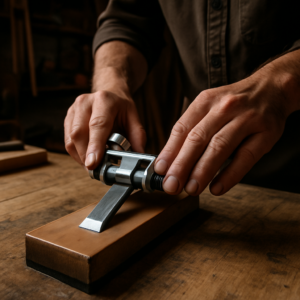
- Angle guide (optional but honest assessment required). Here’s where I’ll be straightforward: I don’t use one every time. For plane irons and chisels, muscle memory and feel get me to roughly 25–30 degrees without thinking about it. But for anything with a specific angle requirement—bandsaw blades, drill points, specialty tools—a simple rest or guide actually speeds things up instead of slowing them down. A basic model costs $15–20 and mounts on the wall above your shelf, so it doesn’t occupy working space.
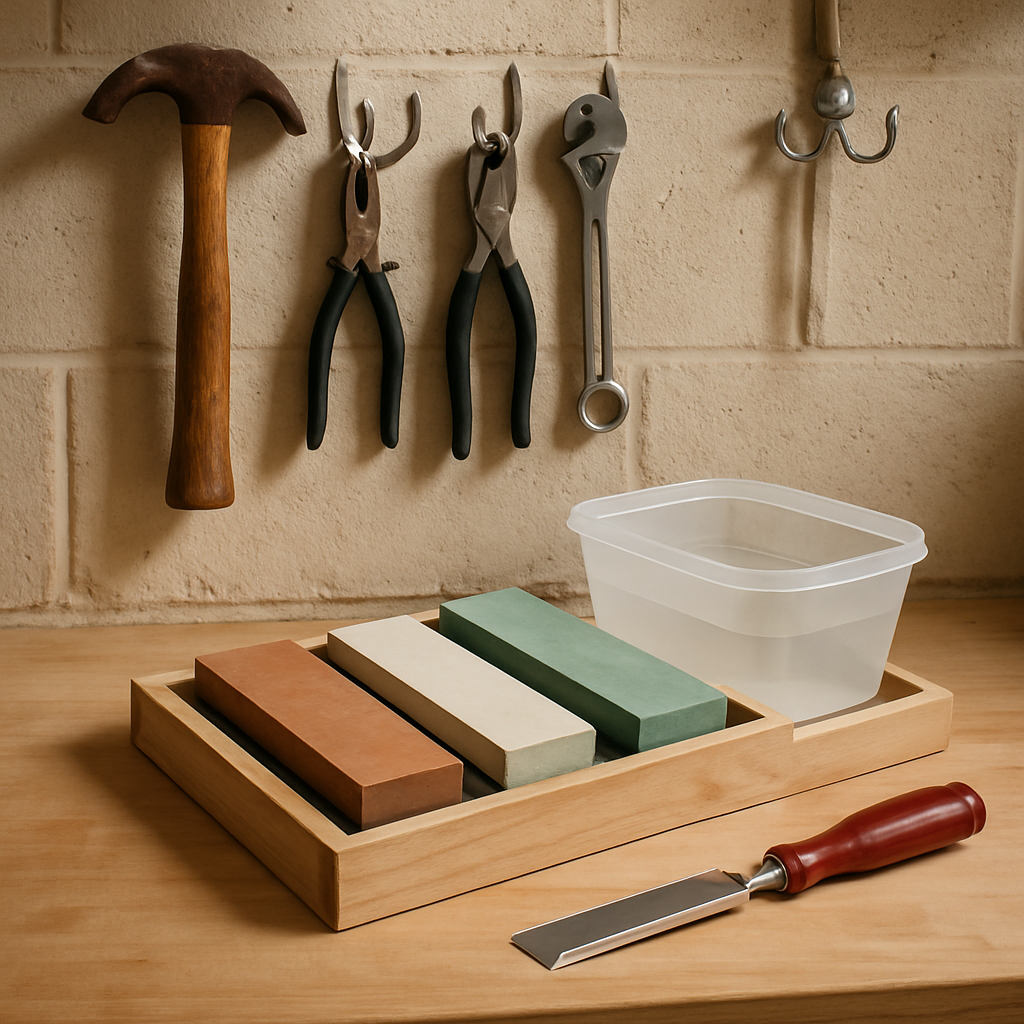
That handful of items covers 95 percent of sharpening scenarios in a maker’s garage. Anything more elaborate tends to become clutter, and clutter is the enemy of actually using your station.
Organization That Supports Regular Use
My layout follows a left-to-right workflow: wall-mounted bin, then the stone surface, then the strop block. Everything you’d reach for while sharpening sits in that sequence, so your hand naturally moves from tool to stone to finishing surface without backtracking or hunting.
Below the shelf, I mounted a magnetic steel strip for holding smaller blades—marking knives, X-Acto handles, small chisels. They stay visible and accessible without consuming shelf real estate. I made it from a piece of 3/4″ angle stock and some heavy-duty magnets from the hardware store, probably $12 of material, and it’s held everything securely for six years with zero maintenance.
Consistency matters more than perfection. Every tool that lives in your station should have a designated spot, and it should return to that spot when sharpening is complete. This sounds trivial, but it eliminates decision-making friction. You don’t think about where something goes; it just goes there. Lower friction means more frequent use, which is the entire goal.
I also keep a small notepad clipped to the wall beside the station—nothing fancy, just a place to mark down tools that are trending dull or need attention. During a build, I’ll jot “plane iron getting grabby” or “drill bit binding.” Then I know exactly what to prioritize next time I’m at the station instead of trying to remember which tool was bothering me last week.
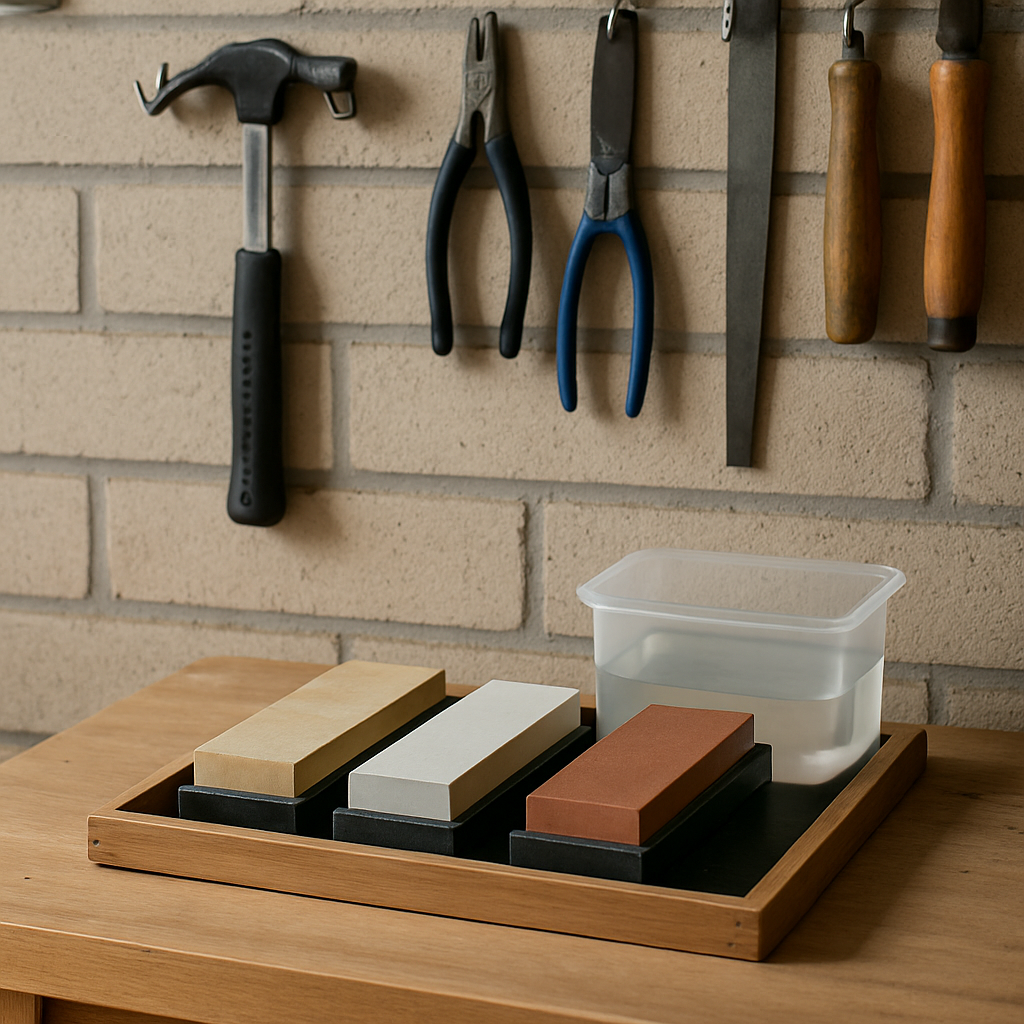
Yes, this station occupies real estate that could theoretically be used for other purposes. Space is a genuine constraint in a small shop, and committing 24 × 18 inches to sharpening means not having that space for storage racks or additional workbench. But in my honest assessment, the improvement to tool performance and work quality has returned that square footage’s value many times over. A dull tool steals from every project it touches. A sharp tool adds to every project it touches. The return compounds.
Building Sharpening Into Your Actual Workflow
The final piece is turning sharpening from a chore into a natural checkpoint. My approach: the moment I feel an edge losing bite, I sharpen it before putting the tool away. That’s five minutes of maintenance instead of the thirty minutes you’d spend later wishing the tool was sharper. The math is undeniable.
Additionally, I run through the station roughly weekly—usually Saturday morning during setup time—and touch up the tools that see regular rotation. A quick pass over the 6000-grit stone takes maybe ninety seconds per tool, and it ensures nothing ever reaches the “genuinely dull” threshold where sharpening becomes daunting.
Stroke technique matters for consistency. I use the same motion every time: begin at the stone’s base, push forward to the tip, lift cleanly, return without pressure. Something like twenty forward strokes on 1000-grit, then ten on 6000-grit, and the edge is ready for work. Repetition builds muscle memory, which means you stop thinking about technique and start thinking about results.
The Actual Difference It Makes
I’m not obsessive about sharpening. I don’t polish edges on 10,000-grit stones until they’re mirror-bright. My philosophy is purely functional: bring edges to working sharpness, maintain that sharpness with regular touchups, and stop overthinking it. That pragmatic approach is exactly why I actually maintain my tools instead of letting them degrade until sharpening feels impossible or unnecessary.
In twelve years of running this garage, the most impactful improvement to my actual output has been that dedicated sharpening station in the back corner. It’s not glamorous. It’s not fancy. But it sits there, it works, and I use it regularly—which, it turns out, is the entire point of having one.
If you’re working in a constrained space and you’re noticing that your cuts aren’t as clean as they should be or your projects take longer than they should, build a sharpening station. Keep it minimal. Keep it organized. And use it without guilt. The payoff isn’t in the station itself; it’s in the sharp tools that come out of it, and those will transform your work faster than anything else you could build.