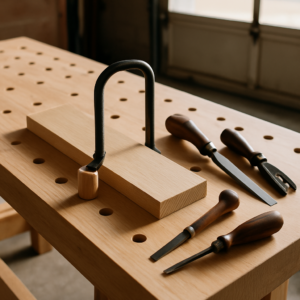
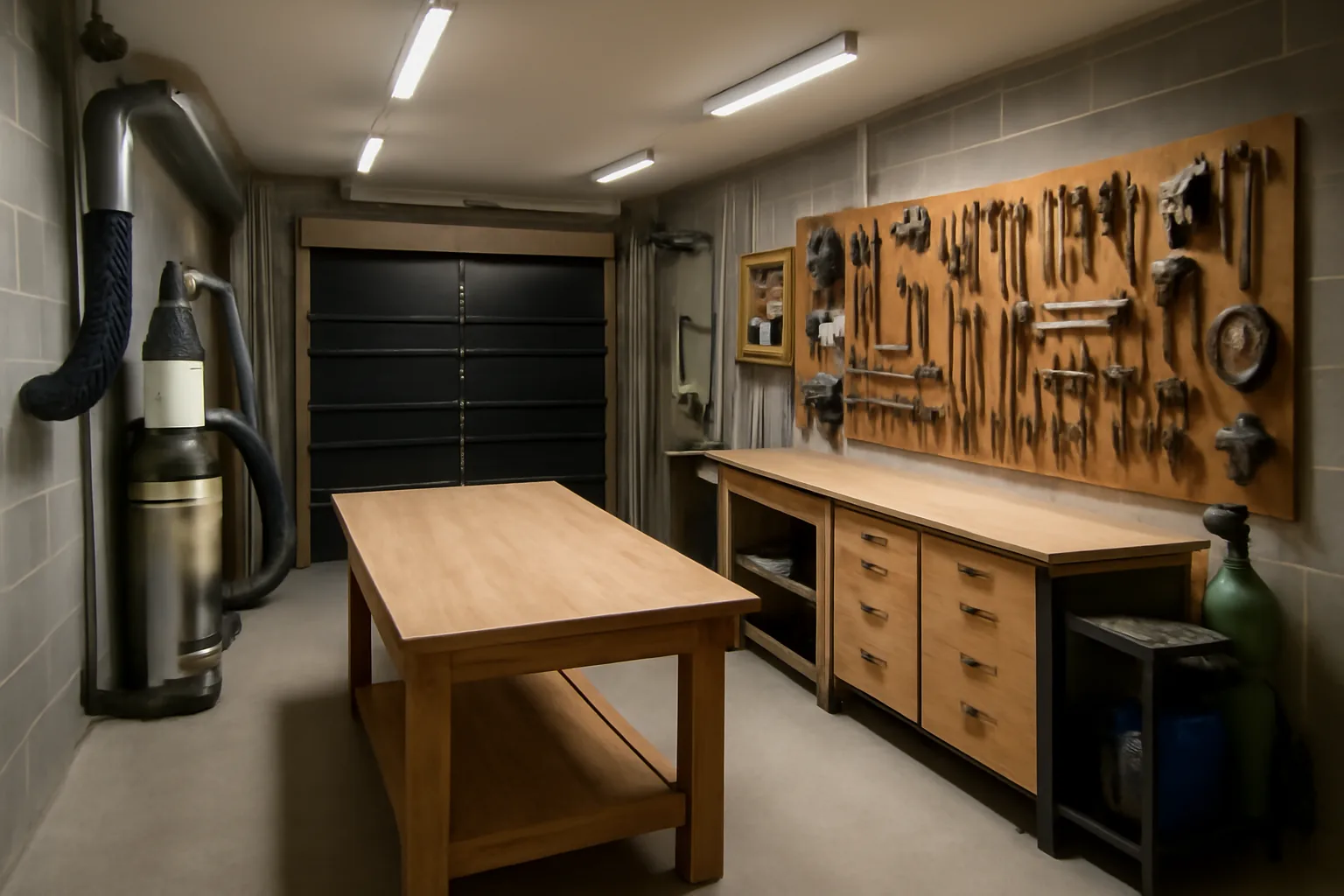

Hanging on my shop wall is a photograph of a layout scribe I destroyed during year two—the tip snapped clean off because I’d miscalculated a line by 3mm, squinting under a single fluorescent tube mounted dead center in the ceiling. That broken tool sits there as a reminder that every mistake I made during those first chaotic months in this 20×20 two-car garage came down to two things: where I put my machines, and where I pointed my lights. I wasted six months bumping into equipment, working in my own shadow, losing tools in dark corners, and cramming a workbench against a wall that made zero sense. If you’re stuck wrestling with how to arrange a tight garage workspace where both metal and wood projects happen, I want to help you skip those six months of learning by collision and poor visibility.
What gets overlooked in most workshop guides is this: your layout and lighting choices—made before you ever purchase equipment—will define whether your shop feels like a place where work flows naturally or like a daily obstacle course. Mess up the flow, and each project becomes a wrestling match. Mess up the light, and dimensions slip past you, dangerous cuts happen because you can’t see what you’re doing. This is where I walk through my actual approach to positioning machines, setting up work zones, and placing light exactly where your hands and eyes need it in a space where every square foot matters.
Machines Follow the Work Path, Not the Other Way Around
The instinct most people have is to push the largest piece of equipment—a table saw or welding rig—straight into the middle of available floor space. That gets it out of the way. That also makes everything else harder. Instead, you need to identify your work triangle first: the three points where you spend the most time moving between your primary workstation, your stockpile of raw material, and wherever finishing or assembly happens. My work triangle runs from my bench across to the welding table, then over to the grinder. That becomes the traffic spine of the entire shop. Everything else finds space around it.
A practical guideline I follow religiously: within that triangle, no machine should require you to rotate more than 90 degrees to reach the next station. I tested this during a typical day of work—carrying a length of steel bar from point to point. Before the reorganization, I was covering almost 40 linear feet per hour just shuttling between zones. After I rearranged everything according to this principle, that distance dropped to under 15 feet. Same projects, same machines. The difference was the path.
The best way to get this right without trial and error is graph paper—I use 1/4-inch grid stock where every square equals one foot of actual floor space. Cut out to-scale paper models of each machine’s footprint, but here’s what matters: include the clearance zone around each tool. OSHA regulation 1910.213 mandates at least 36 inches of open space behind a table saw for safe operation and rip cuts—and that’s even for hobby work. That single requirement alone forces you to reconsider how the saw can angle relative to walls and neighboring equipment. Plot those constraints before you move anything an inch.
Four Distinct Zones That Determine Safety and Efficiency
Rather than treating a small garage workshop as one multipurpose blob, I’ve divided mine into four separate functional zones. Each one has a specific purpose, different lighting needs, and distinct ventilation demands. Overlook these differences and you invite safety problems—not just inefficiency.
Zone 1: Receiving and Stock Storage
This zone gets the least attention, yet it’s where chaos begins. Steel stock, lumber lengths, and raw bar material need a dedicated home right when material enters the space—ideally positioned near an entry point so you’re not hauling inventory across the entire shop. Along my east wall by the garage door sits a 6-foot vertical rack I welded from angle iron one weekend; the material cost was roughly $80. That single rack means no more digging through piles to find the 1-inch square tubing or flat bar you need. Everything gets pulled once, not multiple times.
Zone 2: Primary Fabrication and Equipment Operation
Your table saw, bandsaw, angle grinder, and welding apparatus belong here. This zone generates the most dust fallout, the highest temperatures, and the loudest noise. It demands superior ventilation and the most intense, even lighting you can provide. When positioning machines in this zone, orient them so that debris and sparks vector away from where you’re standing and away from flammable material storage. My welding table faces a concrete block wall deliberately—never positioned toward the bench or any tool racks.
Zone 3: Finishing and Assembly Operations
This zone requires clean, level floor surface and the purest air available in your entire shop, since finishes themselves are combustible and airborne dust particles represent a fire hazard. Keep ignition sources completely separated from this area. NFPA 33 standard specifies that spray finishing areas—even amateur setups in garage shops—need proper air exchange rates and non-sparking electrical fixtures. I learned this the hard way when I initially positioned my spray station a mere two feet from my MIG welder. That configuration lasted about a week before I realized I was inviting disaster.
Zone 4: Hand Tools and Bench Operations
Your workbench lives where the light is brightest and most consistent—this is non-negotiable. This is the station where layout scribing happens, where pieces are test-fit together, and where measurement errors get caught—or catastrophically missed. Position your bench next to a window whenever possible; natural daylight consistently beats artificial light for spotting surface anomalies and reading layout marks clearly. Should your bench be trapped in a windowless section of the garage, then you compensate by upgrading your artificial light dramatically—which I address in the following section.
Lighting Isn’t Decoration—It’s a Critical Safety System
Honest assessment: a shop with inadequate light is an unsafe shop. Insufficient visibility leads to overlooked measurements, unclear cut marks, and hand injuries when you can’t track what a rotating blade or sharp edge is actually doing. The Illuminating Engineering Society publishes recommendations: minimum 50 foot-candles for routine shop tasks, climbing to 100 foot-candles when precision work happens. The typical garage setup—one or two overhead fluorescent strips—barely achieves 15 to 20 foot-candles down where your workbench actually is. That falls dangerously short.
I paid for this lesson during my second year with metal. I was marking a cut line on dark material under a single 32-watt overhead fluorescent. The line I scribed was off by about 3mm—a reading error in dim conditions. The consequence was a wasted afternoon of grinding and rework, plus a $40 steel blank in the scrap bin. That single mistake pushed me to rebuild the lighting system entirely. I’ve tried four separate lighting configurations across three years in this space. What I’m running now is the most effective—and it cost me less money than that ruined steel blank.
Positioning Light to Eliminate Shadow Where Precision Happens
A solitary fluorescent tube suspended center-ceiling guarantees you’re always working directly underneath your own shadow, particularly when you’re bent over the welding table or hovering over layout marks at the bench. Proper light placement isn’t fundamentally about raw wattage; it’s about angling fixtures so your actual work surface gets illuminated without obstruction.
What performs well
- Daylight spectrum at 5000K prevents color distortion and pushes detail visibility—mill marks and scribe lines become obvious instead of ambiguous.
- Connectable units allow you to chain fixtures together and position them exactly where the work actually is, independent of ceiling joists or structural limitations.
- Power consumption stays modest at 42W per unit relative to older fluorescent technology, and elimination of flicker reduces eye strain significantly during extended sessions.
What falls short
- The standard plastic mounting tabs failed me twice before I bypassed them entirely and drilled self-tapping screws directly through the fixture housing.
- Power distribution requires actual electrical runs—the lights daisy-chain together but the lead unit still needs a wall outlet, so you can’t just hang them randomly or you’ll end up wrestling with extension cords.
I almost sent back my first pair because I hung them at the wrong height and they cast a weird glare off the vise jaw, but once I dropped them lower and angled them slightly back, the difference was immediate. Hykolity 4-Pack Linkable LED Shop Lights (4FT, 42W, 5000K Daylight)
This post contains affiliate links. As an Amazon Associate, I earn from qualifying purchases at no extra cost to you.
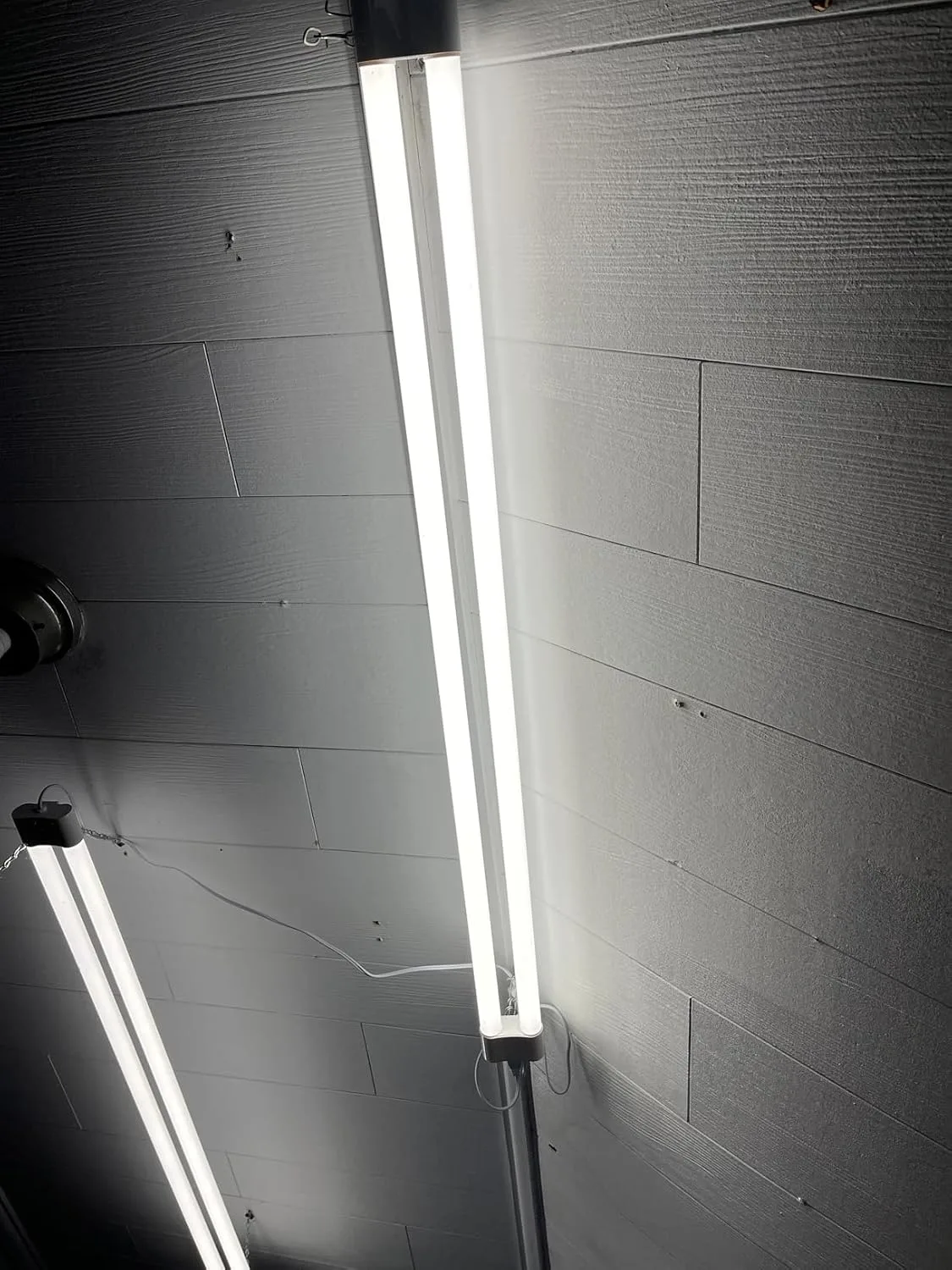
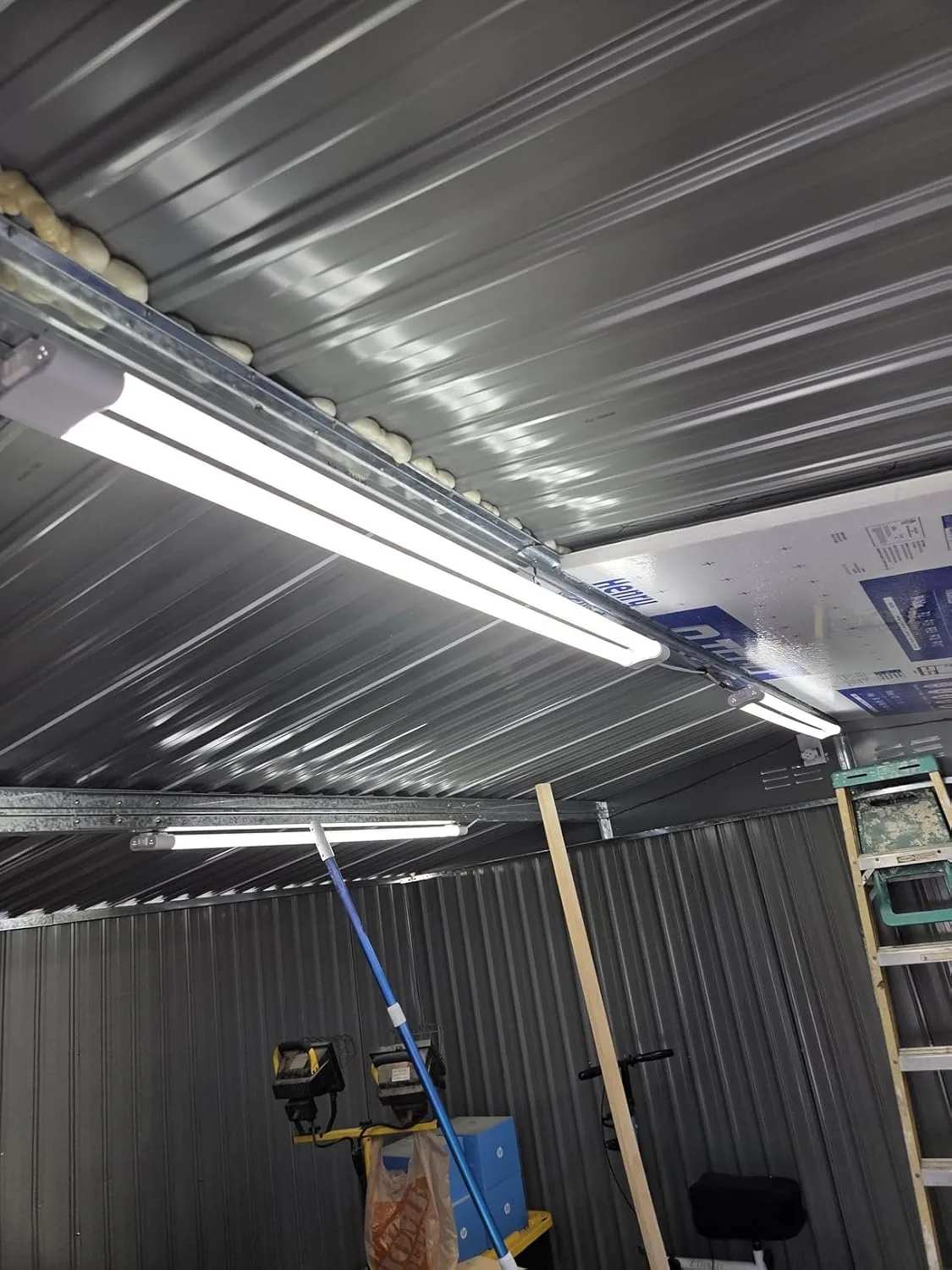
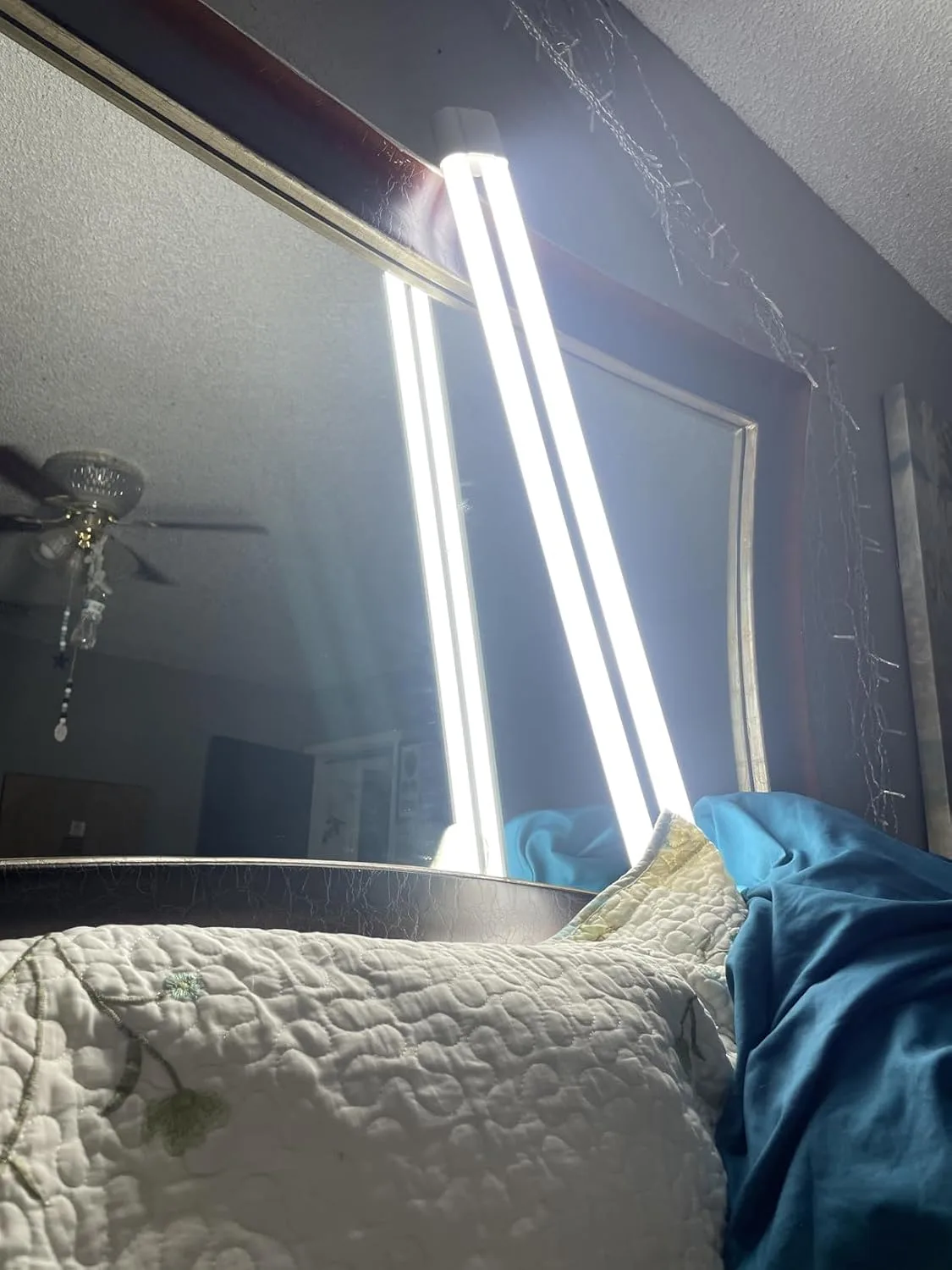
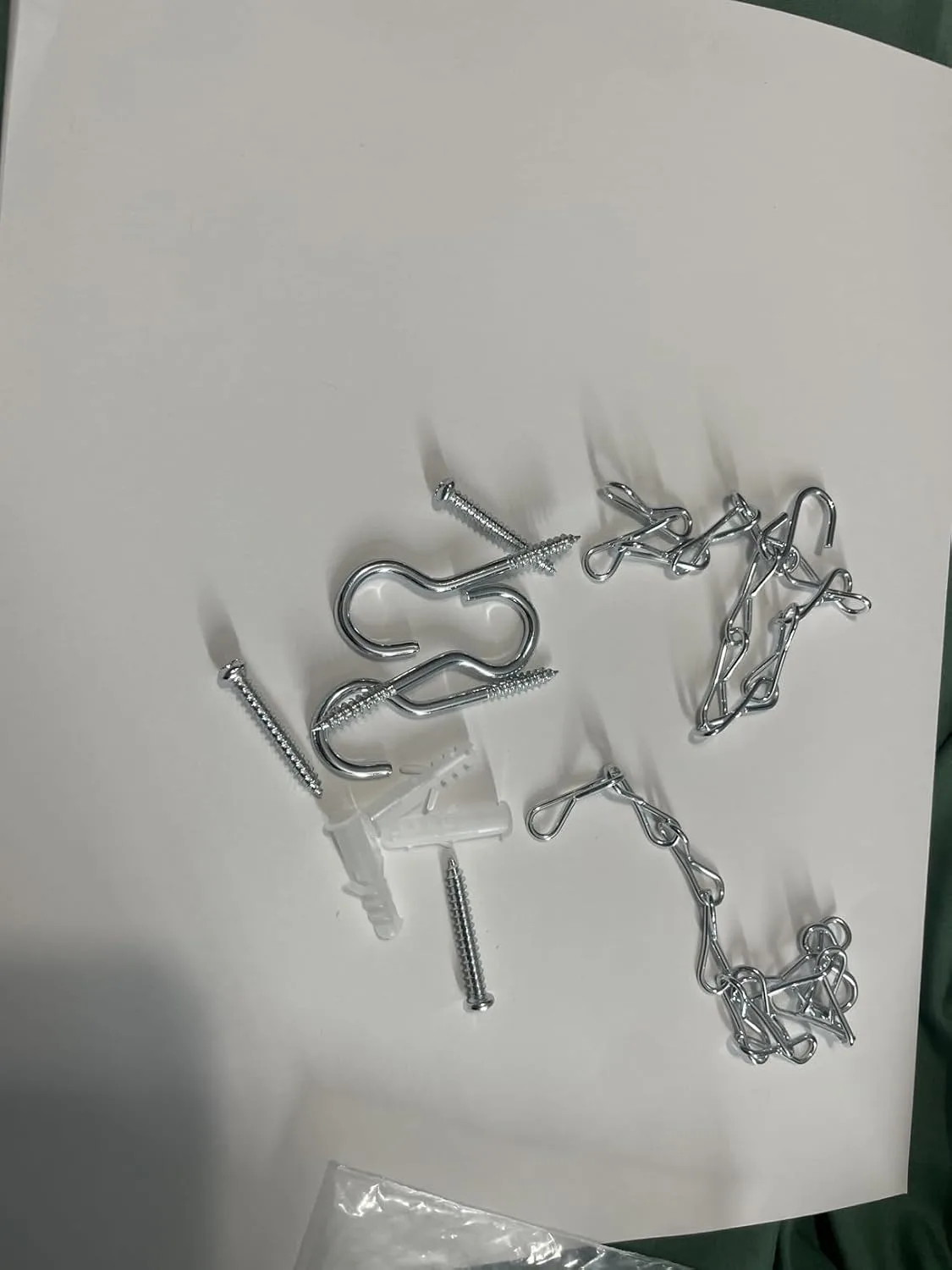
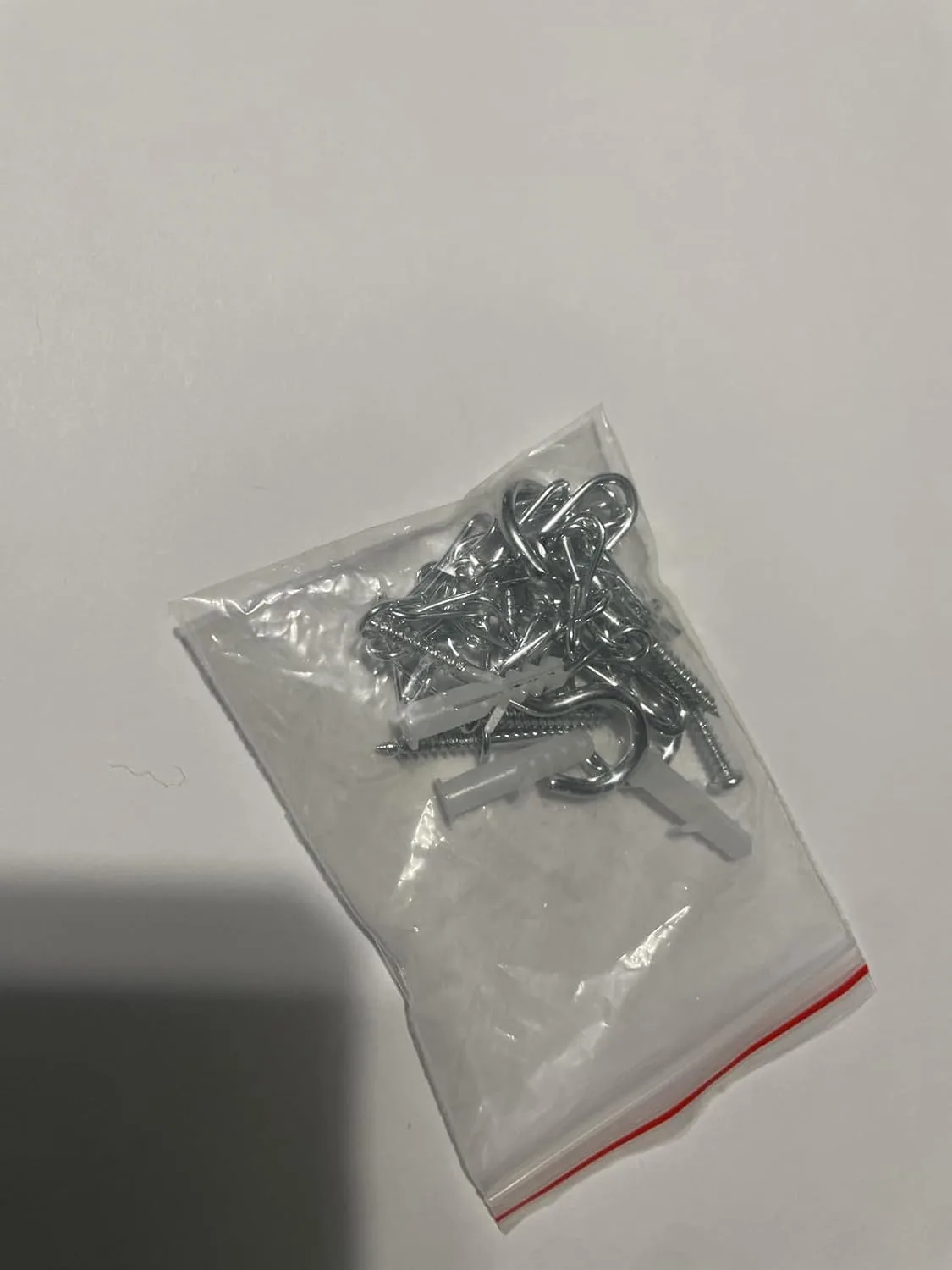
Hykolity 4-Pack Linkable LED Shop Lights (4FT, 42W, 5000K
I chain these over my workbench and my eyes don’t burn out by day’s end.
Check Price on Amazon →