
Everyone assumes that shabby welds mean your equipment is holding you back. That’s backwards. Rough beads, holes burned clean through thin stock, spatter coating everything in sight, complete confusion about what’s actually going wrong — I knew that frustration well. Took me roughly three months of banging my head against the same problems before the mechanics finally made sense.
The reality that changed everything: your technique, not your machine, is what separates clean beads from disasters. Across the last four years, I’ve cycled through countless spools of MIG wire and enough stick electrodes to stock a small supply closet in my two-car garage operation. I’ve also repeated nearly every pitfall you can imagine — sometimes twice over. What follows is pulled straight from that hands-on grind, not from somebody’s manual.
When your welds look like they belong in a scrap pile, the solution isn’t to walk away. Every bad bead contains real information. The challenge is extracting the right lesson from each one.
Mistake #1 — Gun Speed Was Destroying My Beads Without Me Knowing It
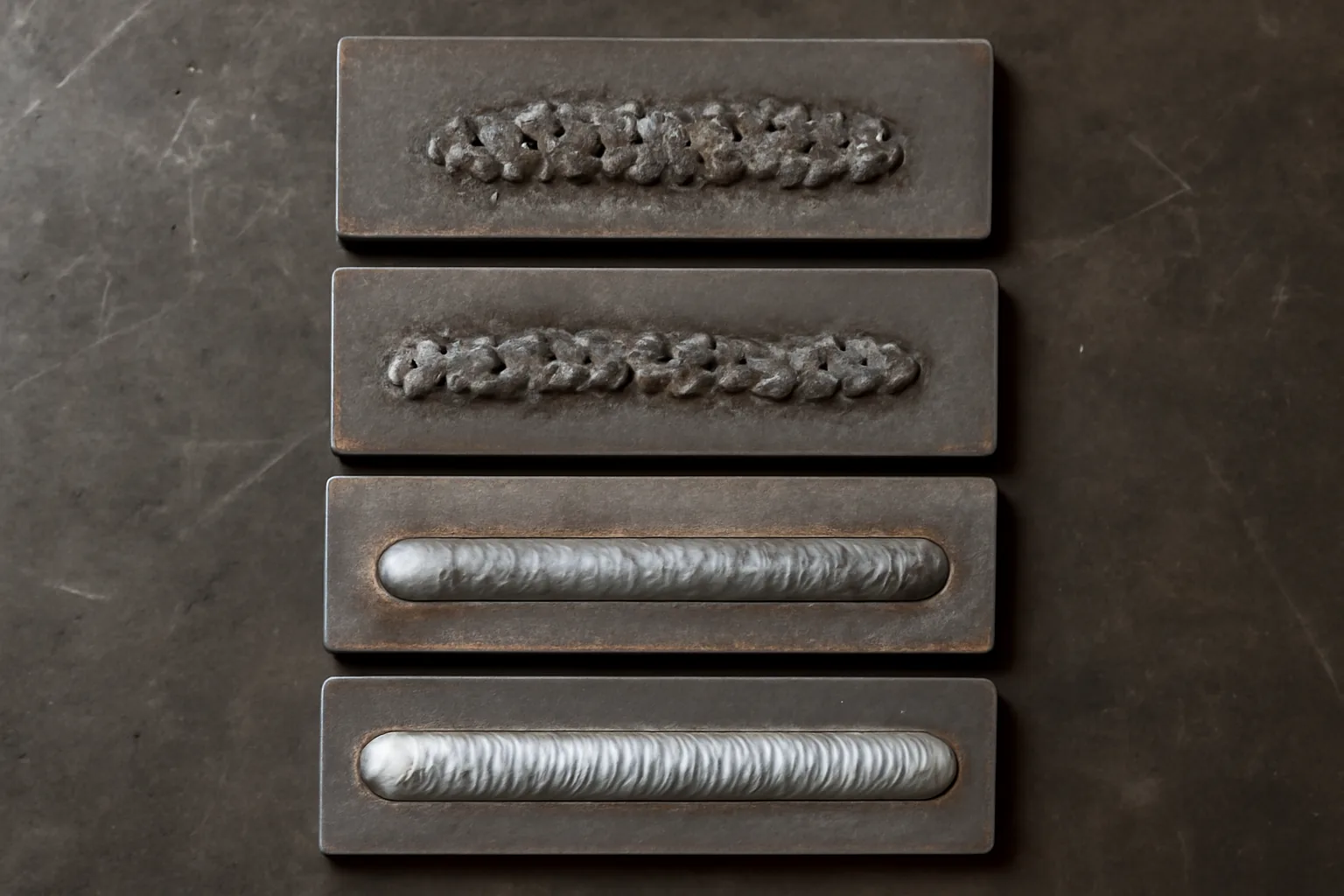
Nothing sabotages beginner welds faster than incorrect gun speed. Race along the joint too quickly and your bead becomes thin, convex, and dull in appearance — what experienced welders refer to as a “ropy” configuration. Creep along too slowly and excessive temperature transfers into the workpiece itself. On thin gauge material that spells burn-through, and on any thickness it produces a bulky, unfused puddle.
My introduction to this lesson came while fabricating some 16-gauge shelf supports. Holes kept opening up in the metal. I turned the dial down, figuring the machine was too hot. That made things worse. The culprit? Slow movement caused by hesitation. Hesitation creates loitering. Loitering = heat accumulation beyond what the base metal can tolerate.
Solution involves repetitive practice on throwaway pieces until velocity becomes second nature. Aiming for around 10-14 inches per minute works well across typical MIG setups on 1/8-inch carbon steel. Tune your ears to the arc sound — steady frying-pan crackling indicates you’re in the pocket. Irregular pops or excessive sputter point toward velocity or heat output needing adjustment.
Mistake #2 — Holding the Gun Wrong Cost Me Months of Consistency
Orientation of your welding gun exerts influence that beginners consistently underestimate. With MIG processes, the work angle — angle between the gun nozzle and the joint surface — belongs at roughly 90 degrees. The travel angle, referring to the tilt orientation as you progress through the joint, should sit between 5 and 15 degrees in your direction of motion. This distinction divides the push technique from the pull technique.
Pushing the gun in MIG (GMAW) results in broader, flatter beads with excellent visibility into the puddle. Pulling produces tighter beads with marginally deeper bite into the base metal. Stick electrode work (SMAW) demands pulling almost exclusively. My early months involved confusing these choices repeatedly. Pulling at 30 degrees while doing MIG left my bead fusion all over the place, and I didn’t understand why.
Quick diagnostic method: observe spatter distribution. If hot spatter sprays rearward into territory you’ve already covered, gun orientation is incorrect. Study the bead itself — asymmetrical ripples suggest the gun is leaning to one side. Orientation adjustments require zero investment. They do demand conscious effort and deliberate practice until they’re ingrained.
Mistake #3 — Surface Contamination Destroys Quality Without Warning
Seasoned welders still get bitten by this one regularly. Scale from the mill, oxidation, residues, coatings, and galvanic layers all corrupt the molten puddle. The outcome is porosity — microscopic air cavities locked inside the solidified bead. Porosity appears as minor surface voids or small depressions. Beyond looks, it severely compromises the joint’s load capacity.
The Structural Welding Code for Steel (AWS D1.1) actually defines what porosity levels are permissible in structural applications. Your garage workshop won’t produce bridge components, yet the concept applies: contaminants degrade performance. When you’re making shelving brackets, repair work, or shop fixtures — my bread and butter — porosity under stress can snap the joint.
My current surface cleaning takes roughly five minutes per connection point. A flap disc on my 4.5-inch grinder removes scale and corrosion first. Next step: acetone and a lint-free cloth across the target zone. Final check scans for any remaining lacquer or protective coating. Those five minutes have rescued me from having to scrap and restart whole builds. Surface prep isn’t an extra — it’s the bedrock of solid welds.
Practice Plates — Budget-Friendly Training Without Guilt
Starting out in welding means every unsuccessful bead represents spent consumables — cash drains if you’re burning through material you actually need for a genuine project. Practice plates cut to uniform dimensions let you concentrate purely on motion and hand position rather than fretting about destroying something you had plans for.
Why they work
- A dozen pieces per batch feels substantial enough for a full training day while staying manageable — lay down beads on six, evaluate progress, then burn through the remainder using corrected form.
- Factory edges arrive prepared and even, so any shortcomings in your bead come directly from your execution rather than fighting against sloppy prep.
- The standard 1/8″ gauge matches the operating window of entry-level welders — no second-guessing whether amperage is sufficient or whether equipment is simply struggling.
Where they fall short
- Twelve plates exhaust surprisingly quickly if you stack multiple layers on each coupon, meaning a second order materializes sooner than the per-unit cost lets on.
- The thinner gauge poses burn-through hazards for overhead or vertical work — you need rock-solid technique to prevent punching holes straight through.
I almost convinced myself that welding on the back of old truck bed sides was good enough practice, but honestly the inconsistent thickness and rust prep work were teaching me bad habits instead of technique. WelderElite 12-Piece Welding Practice Coupons fixed that.
This post contains affiliate links. As an Amazon Associate, I earn from qualifying purchases at no extra cost to you.
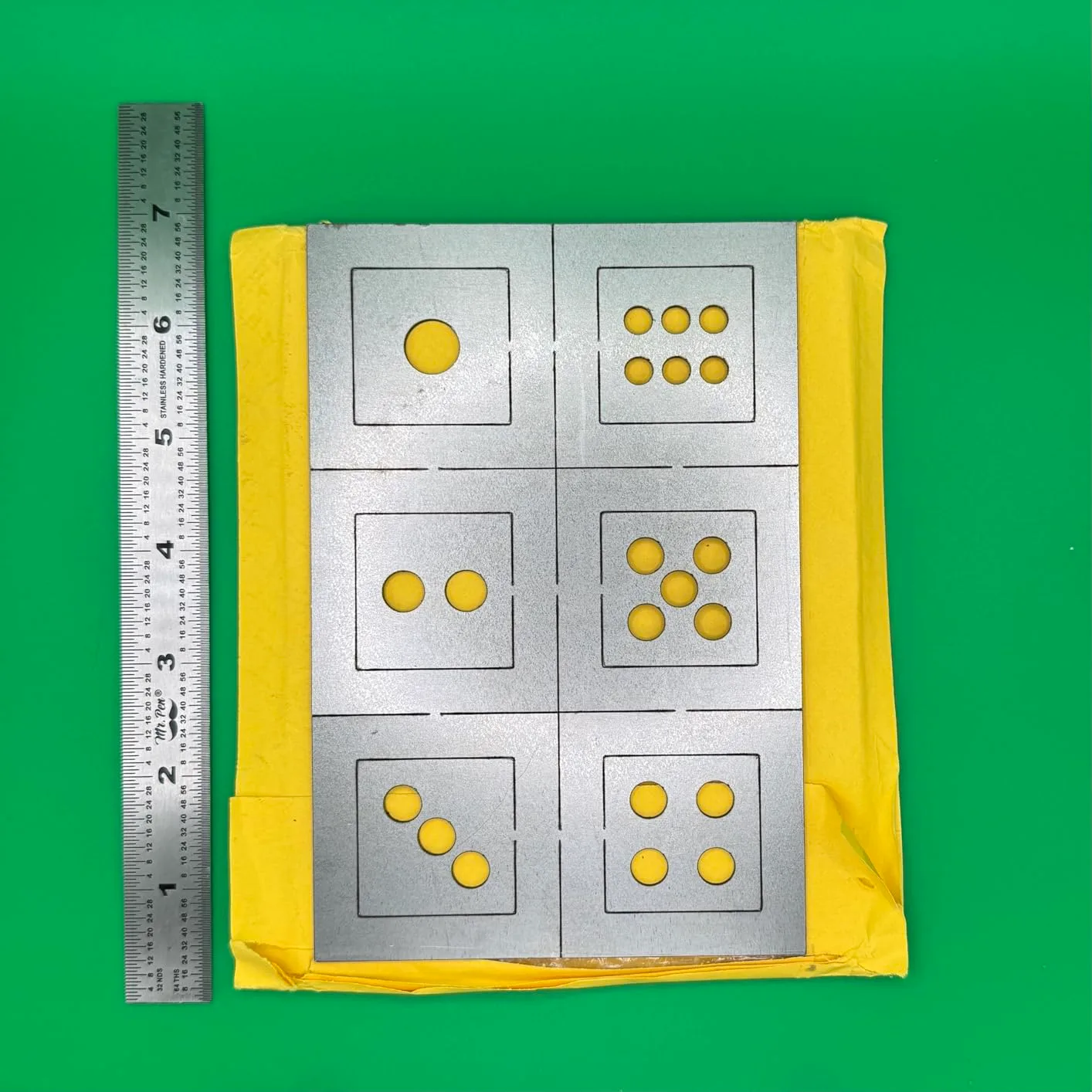
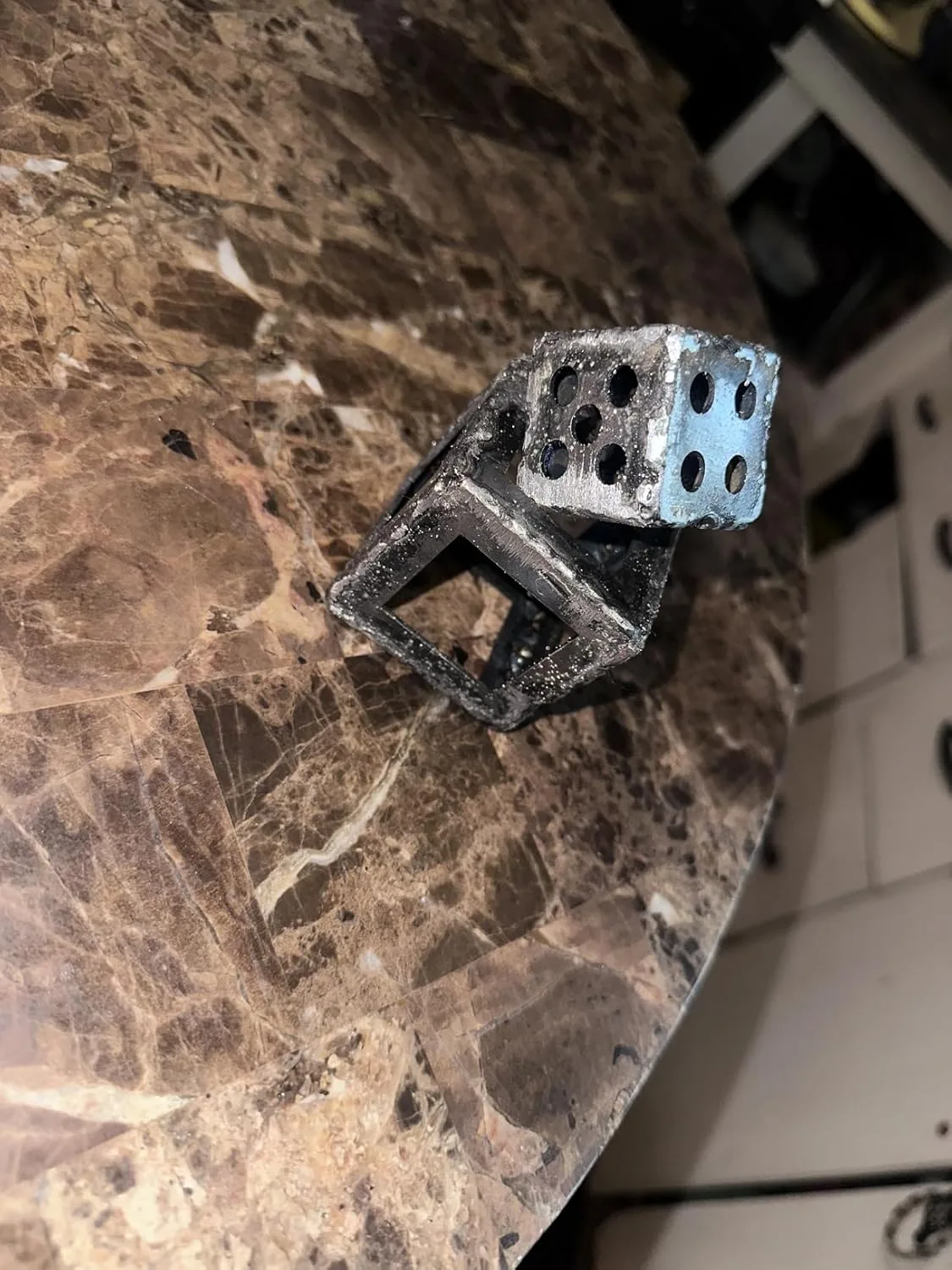
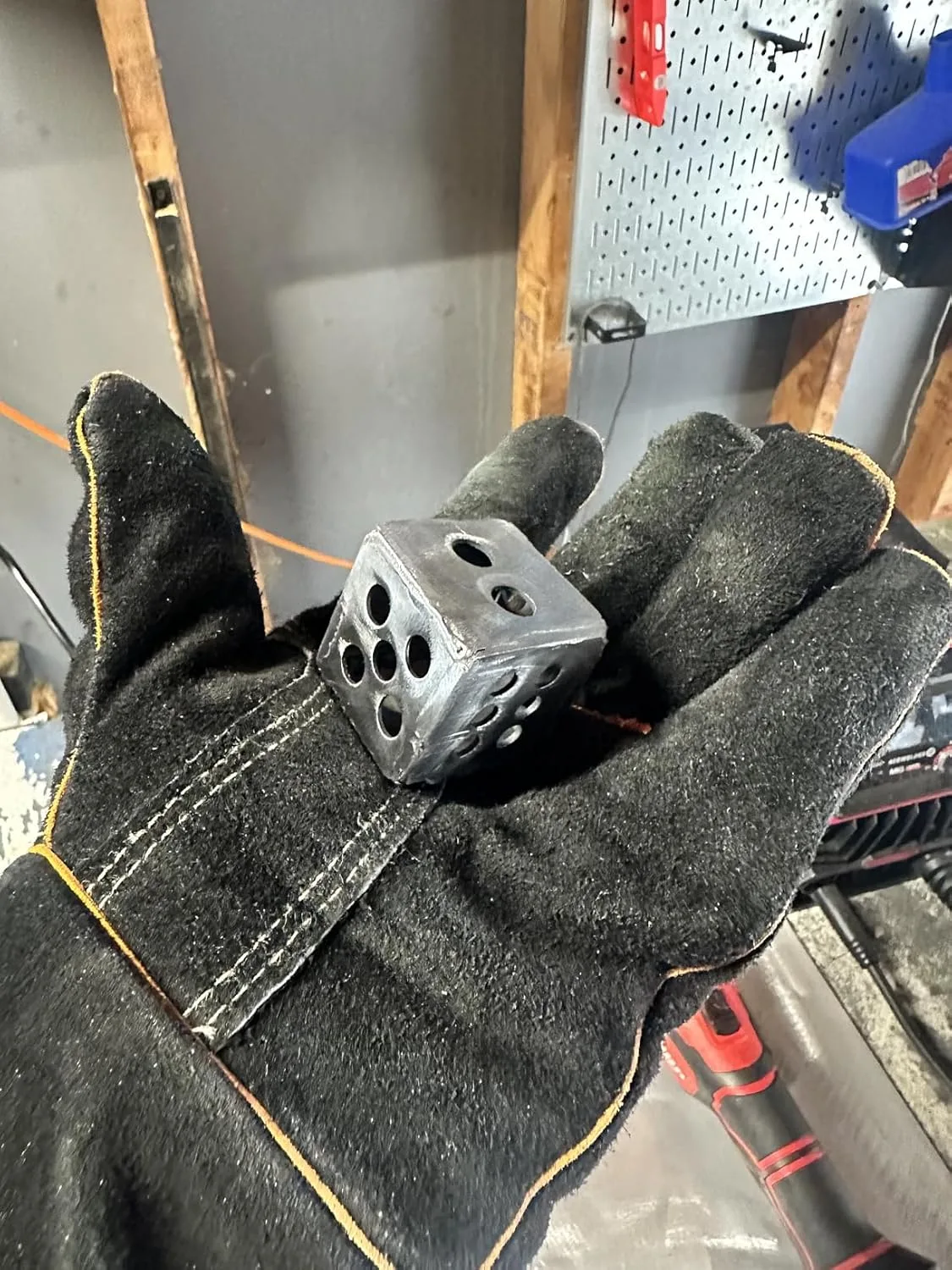
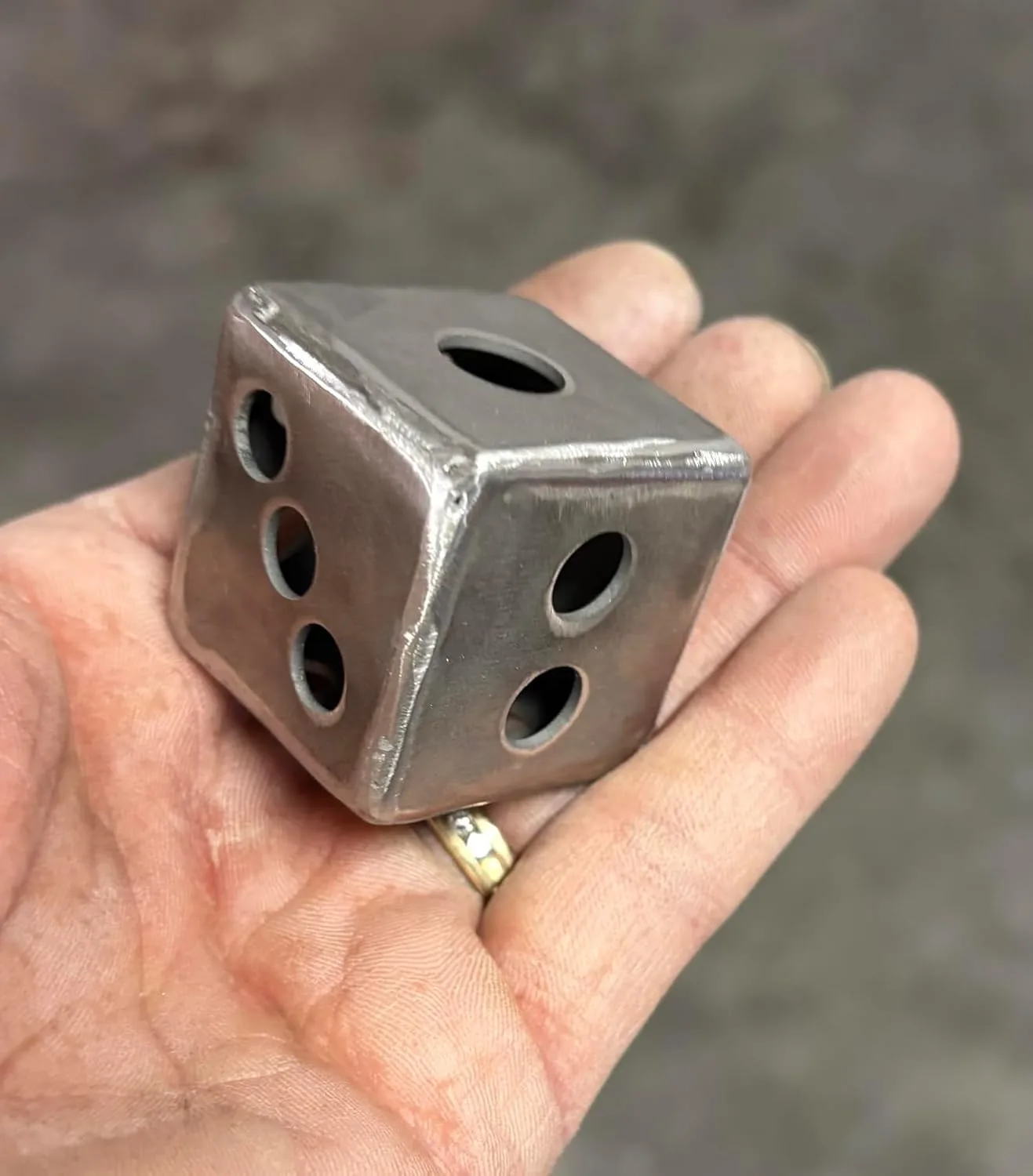
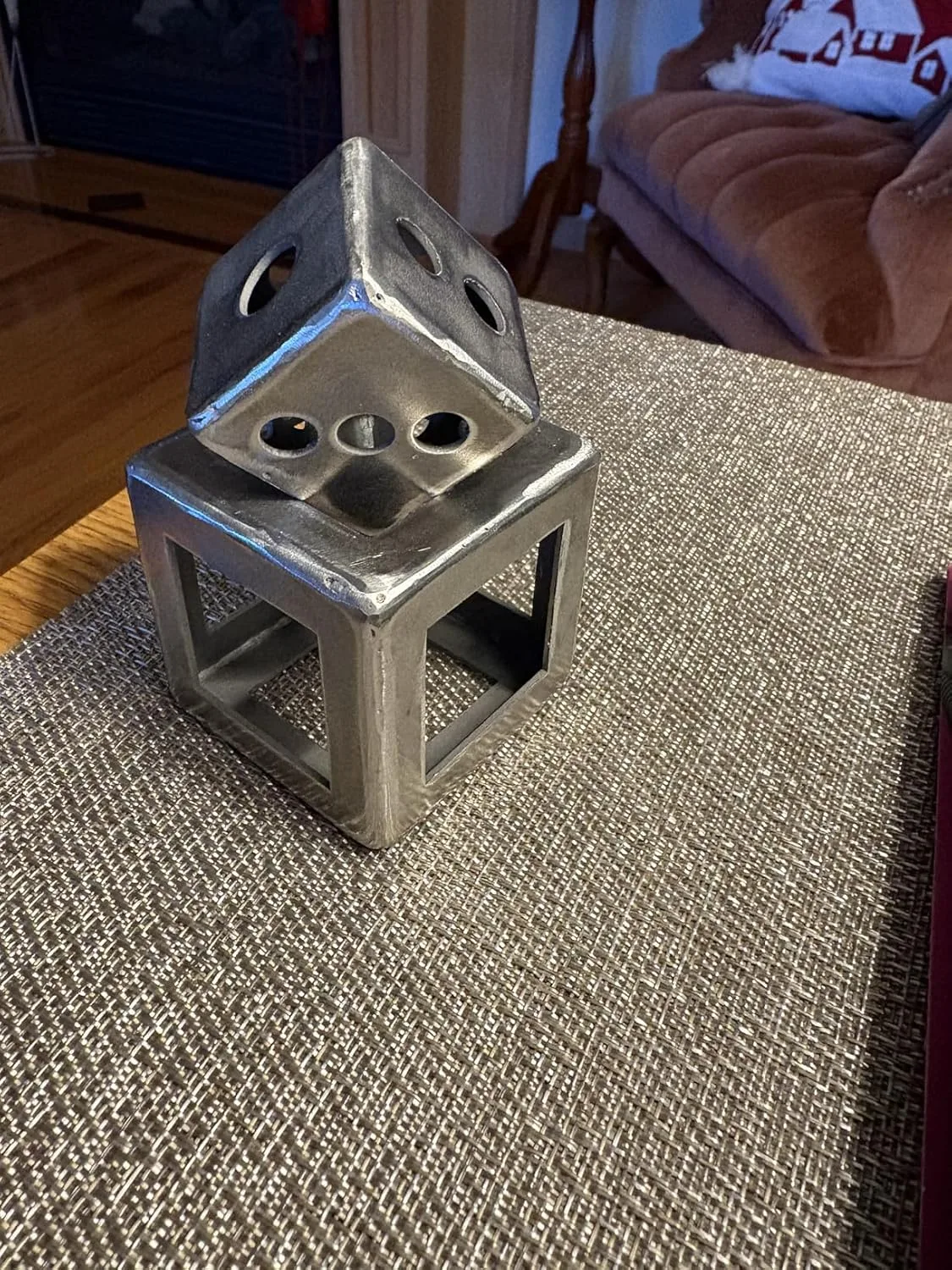
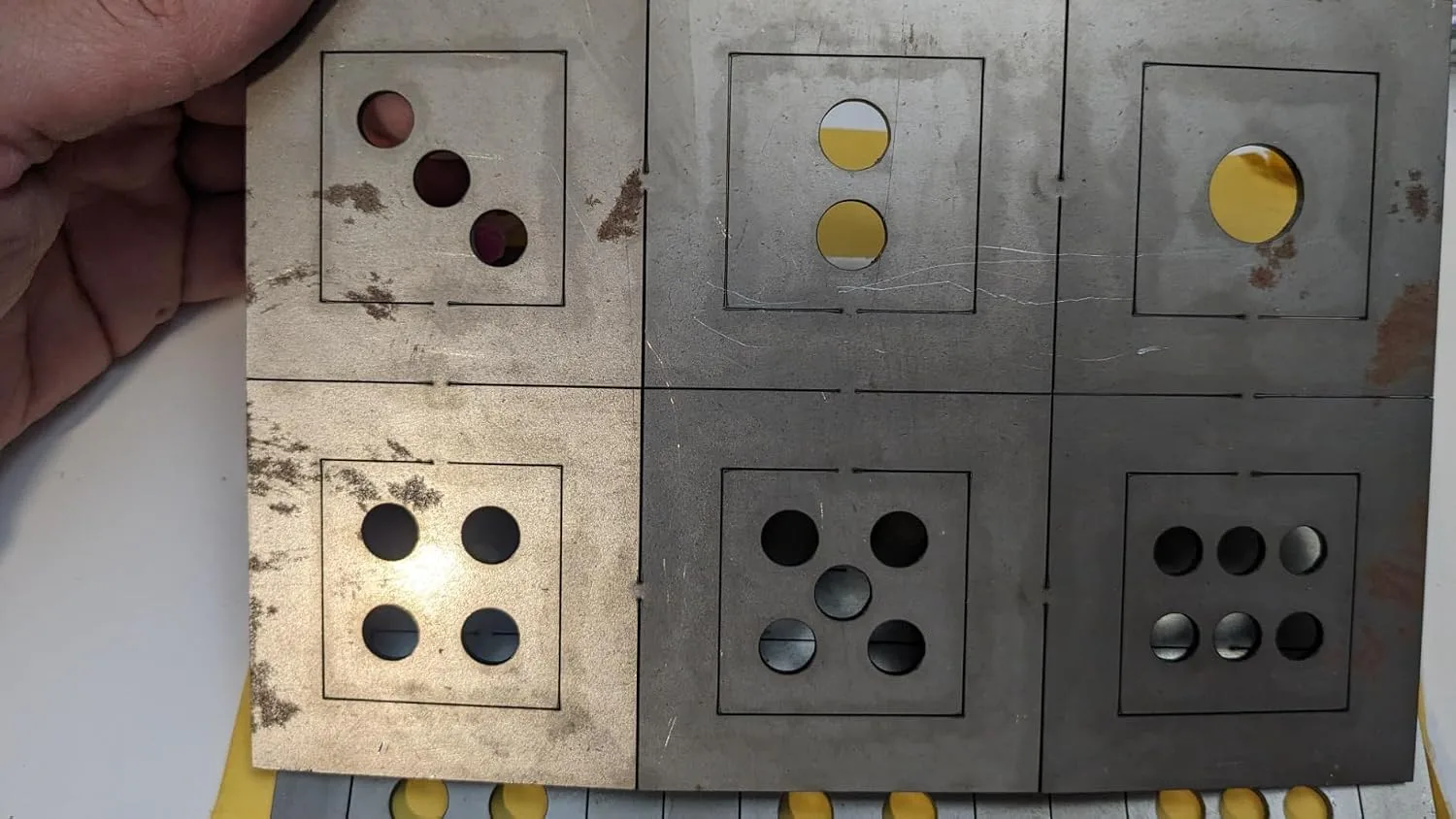
WelderElite 12-Piece Welding Practice Coupons
I burned through half a set, fixed my technique, then nailed the rest without wasting metal.
Check Price on Amazon →