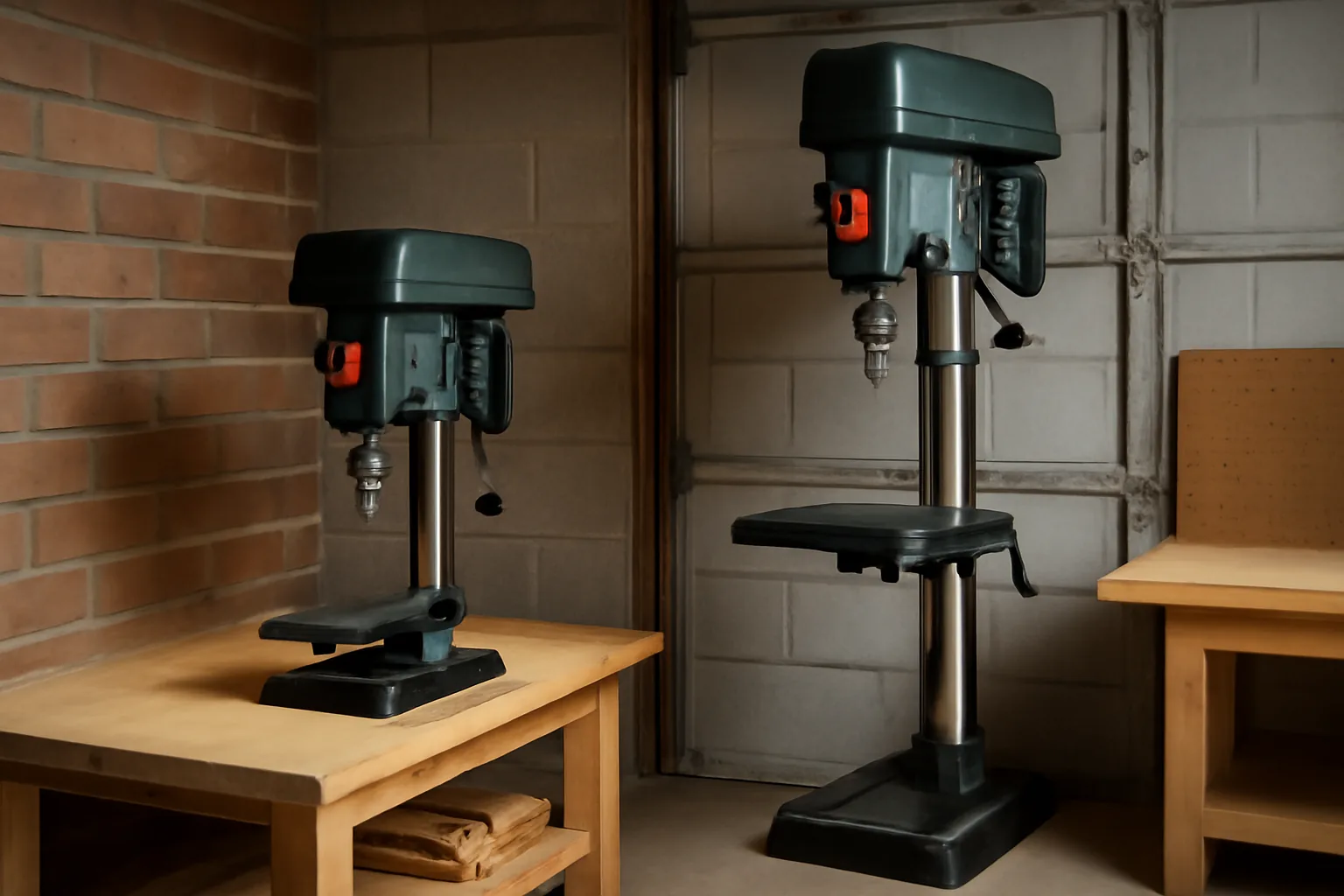

Over on the left side of my shop, wedged between the welding station and my main workbench, sits a rolling cart that holds more than it looks like it should. On top of that cart lives a 10-inch benchtop drill press, bolted down solid through steel plates I welded to the frame. Twelve years ago, I nearly committed $400 to a full-size floor model that would have consumed a third of my 24×24 workspace. The decision between a benchtop and floor drill press isn’t fundamentally about which machine performs better — it hinges entirely on whether your shop can breathe after you’ve made the purchase.
Both platforms have occupied my garage at different points. I’ve drilled holes, shaped brackets, bored out furniture components, and worked through stacks of angle iron on each type. That hands-on history revealed something most folks get backwards. People typically ask “which design is superior,” when they should be asking “which one actually aligns with how my shop operates.” Those aren’t the same question at all. Let me walk through what I’ve learned from actual use, real spend, and mistakes I’ve made along the way.
Floor Footprint vs. Usable Workspace: The Numbers That Actually Matter
Square footage is where this conversation starts. A standard 17-inch floor drill press occupies a footprint around 18×20 inches — roughly 2.5 square feet of solid real estate. Pile on the safety buffer you need around all sides during operation, and you’re carving out a 4×5 foot zone that becomes essentially off-limits to everything else. That’s manageable in a two-car garage workshop. Throw that same machine into a single-car 12×20 or a 10×16 shed, and you’re making a major territorial sacrifice.
A benchtop unit behaves completely differently. It claims about 18×12 inches of bench surface, and when the work stops, that same surface still belongs to your workflow. My particular setup uses a rolling cart I fabricated from angle iron and plywood. The press rolls out when drilling happens and tucks against the wall when it’s idle. That kind of flexibility carries real weight in a garage where every square foot serves double or triple duty.
Floor presses do deliver a legitimate vertical advantage: throat depth. A full-size floor model typically reaches 16–18 inches and accepts taller stock beneath the spindle. That’s genuinely useful if your projects regularly demand drilling parts that stand tall or run long through the chuck. But if you’re honest about your work, most hobby metalworking and woodworking exists comfortably within the 8–9 inch throat you get on a benchtop. Size appropriately to what you actually build, not what you think you might someday attempt.
Power and Speed Range: Where Floor Presses Win (and When It Matters)
Typically, floor drill presses run stronger motors — anywhere from 3/4 HP to 1 HP — and offer broader speed selections, sometimes 12 or more spindle options spanning 250 to 3,000 RPM territory. That lower-end grunt becomes crucial when you’re tackling large-diameter holes through thick steel plate using a 1-inch spade or Forstner bit. Operating at lower speeds reduces friction heat and extends the lifespan of expensive cutting tools considerably.
Today’s benchtop options typically deliver 5-speed capability across a 570 to 3,050 RPM band — which satisfies the overwhelming bulk of hobby applications. Working through 1/4-inch to 1/2-inch steel? That range handles it without compromise. Boring hardwood furniture pieces? Covered completely. I spent a solid year convinced my older benchtop couldn’t manage 3/8-inch mild steel angle iron. When I finally tried it with proper cutting fluid and a cobalt bit at correct speed, it worked flawlessly. I’d been underestimating the machine’s capabilities the entire time.
A floor press truly earns its place when you’re doing volume drilling — running the same holes repeatedly through heavy stock, deploying large-format bits beyond the 1-inch threshold, or regularly attaching mortising heads that demand consistent muscular output. For occasional weekend fabrication? A benchtop motor over 6 amps delivers everything necessary across typical project materials.
Benchtop vs Floor Drill Press Small Shop: My Honest Recommendation
If your workspace totals less than 300 square feet, I’m saying this plainly: a benchtop serves you better initially. Upgrades can follow if your projects genuinely require them. Across my circle of hobby metalworkers and woodworkers, those who jumped straight to floor presses repeatedly expressed regret about not weighing footprint more carefully before committing funds. It’s a pattern I’ve watched repeat itself constantly.
A floor press deserves serious consideration when you own at least 200 square feet of dedicated floor zone, regularly work with stock taller than 12 inches, or handle production-scale quantities that justify permanent machine positioning. They’re also justified if your drilling requirements center on materials needing sustained low-speed, high-torque performance — thick aluminum plate or stacked steel sections, for instance. Those represent legitimate reasons. “It looks more workshop-ready” doesn’t qualify.
Price tags play an honest role in this decision too. Hobbyist-grade floor presses run $350–$700 cash outlay. Hobbyist-grade benchtop presses run $150–$350. That $200–$400 spread can fund a quality angle grinder, a welding cart, or a really solid vise. In a constrained garage situation, where your money gets allocated carries equivalent importance to which machine you’re buying. Invest where your actual process requires it.
The Benchtop That Finally Fit Without Sacrificing Real Work Space
When you’re evaluating a benchtop drill press suitable for a tight garage scenario, you need capability approaching what a floor unit delivers without demanding floor-unit footprint demands. The SKIL 6.2 Amp 10-inch tackles the metalworking and drilling tasks that drive people toward full-size presses, while leaving your shop physically functional.
What works
- The 5-speed adjustment system lets you dial specific RPM values — no single-speed trap — meaning soft alloys, ferrous metals, and cast materials each operate at their sweet spot without motor stress.
- Footprint dimensions are genuinely compact enough for mounting on a rolling cart or bolting to a corner workstation, with realistic repositioning when bench space needs reclamation for other tasks.
- Quill travel runs deep enough for through-boring and counterbore operations without feeling undersized — I’ve run it on 3/16″ mild steel and brass without the motor working harder than intended.
What doesn’t
- Table deflection under lateral clamping pressure isn’t invisible if you skip bolting it down securely first — a useful lesson that “benchtop” still requires permanent attachment, not casual placement.
- Chuck precision isn’t competition-grade, so if your work demands tolerance accuracy under 0.005″, you’ll quickly experience frustration with runout variance.
I almost walked past this one for a used industrial Clausing at an estate sale, convinced I needed that cast-iron authority — until I remembered my garage floor doesn’t have room for both regret and machines. Grab the SKIL 6.2 Amp 10 In. 5-Speed Benchtop Drill Press (DP9505-00) and you’ll spend your money on bits and projects instead of apologies to your partner.
This post contains affiliate links. As an Amazon Associate, I earn from qualifying purchases at no extra cost to you.
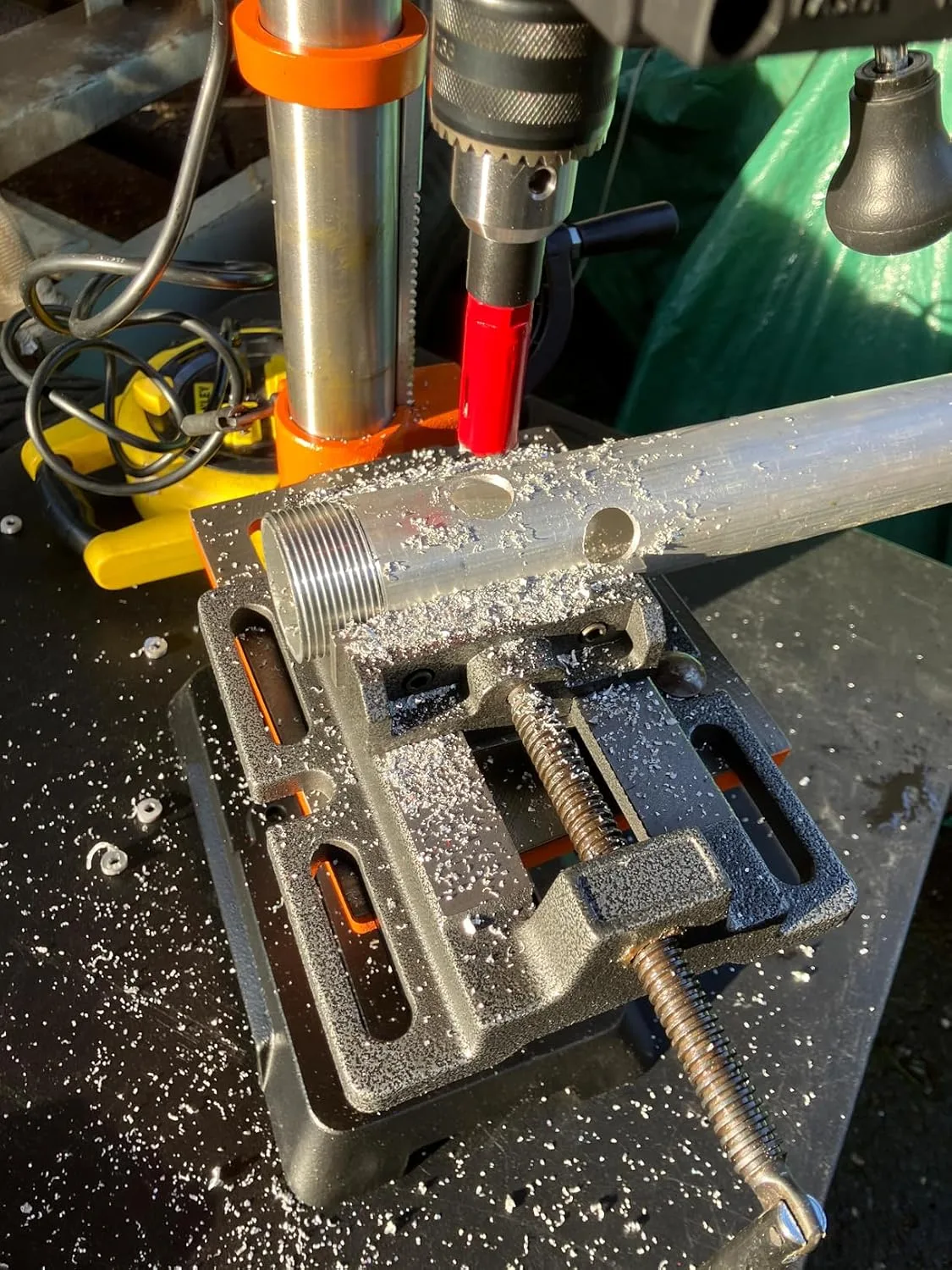
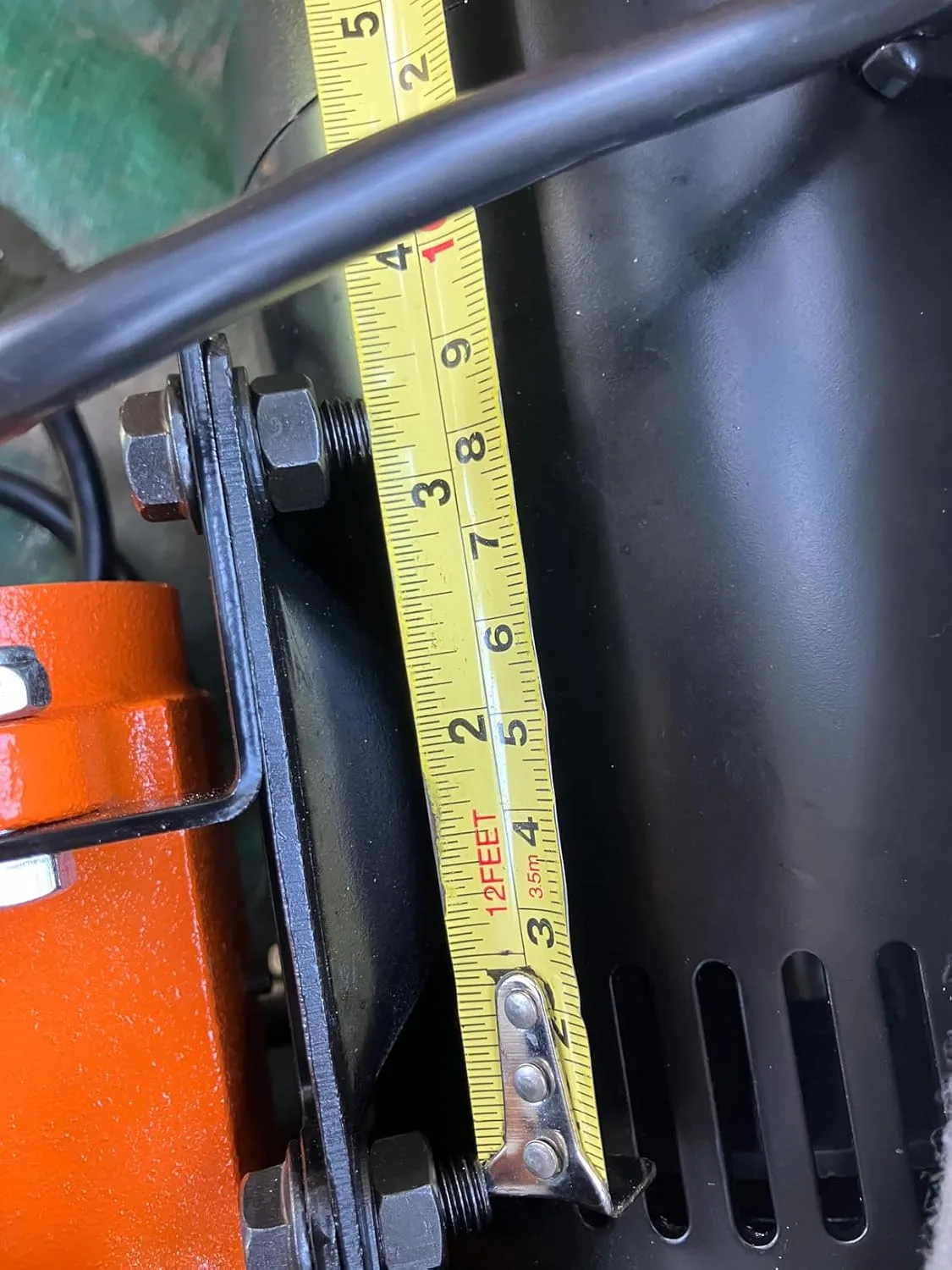
SKIL 6.2 Amp 10 In. 5-Speed Benchtop Drill Press (DP9505-00)
I’ve drilled through mild steel and brass on this without feeling like I’m pushing a toy press.
Check Price on Amazon →