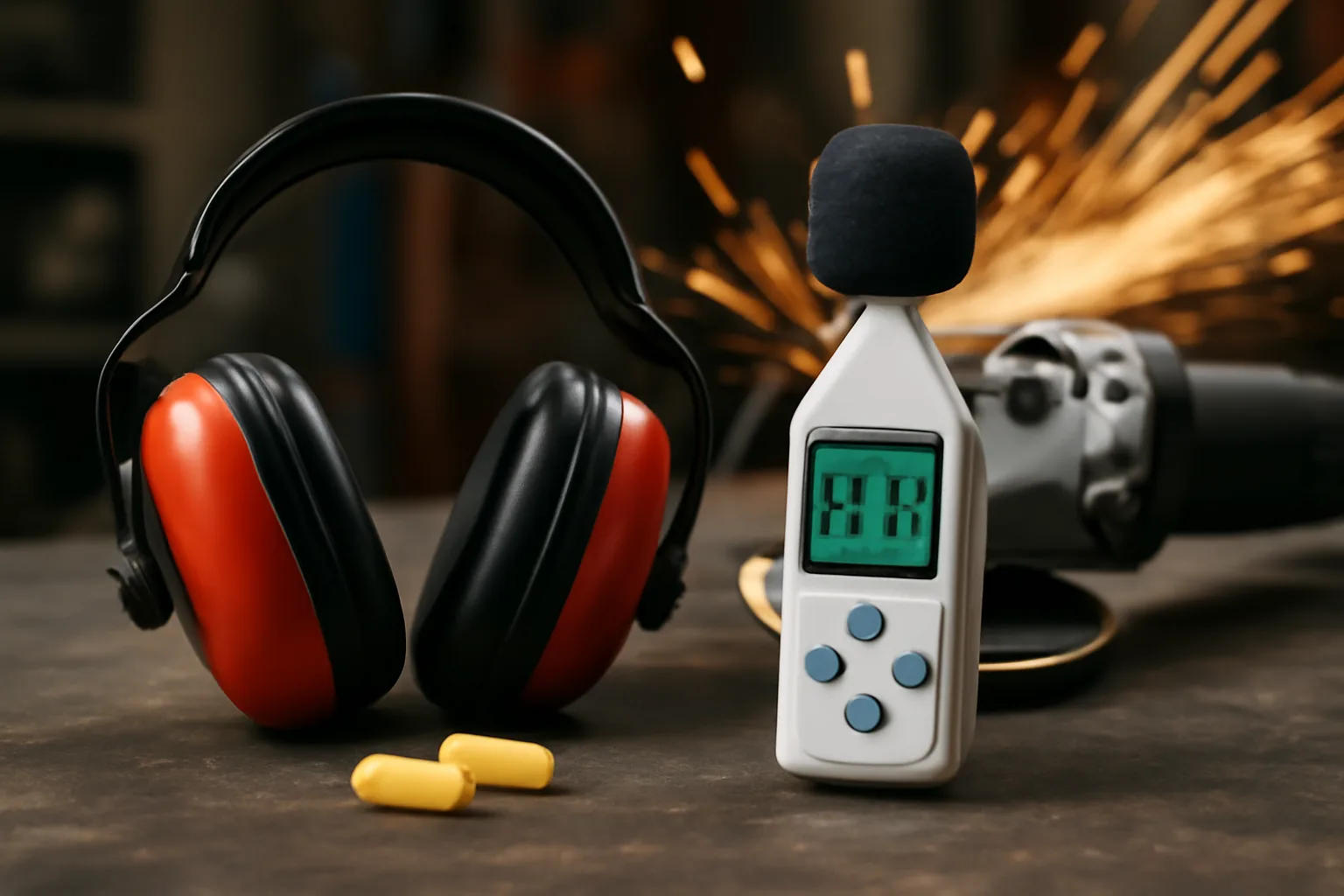
Most shop hobbyists convince themselves that short bursts of noise won’t cause lasting damage. It’s the assumption that wrecks hearing. I learned this the hard way — an audiologist found I’d already lost roughly 15% of my high-frequency range by age 34, despite only working in my two-car garage shop for a dozen years. Angle grinders, plasma torches, and chop saws don’t announce themselves as dangerous the way a jet engine does. You just gradually stop hearing the higher notes in conversation. By then, the damage is done and irreversible. This guide walks through actual decibel measurements and protection strategies based on what I’ve learned losing hearing I can’t get back.
The dangerous myth I encounter all the time: “Fifteen minutes with a tool won’t hurt me.” That’s fundamentally wrong. The science is clear. Per NIOSH standards, 100 dB of sound energy for only 15 minutes daily is sufficient to degrade your hearing permanently over months and years. Angle grinders operate in the 100–105 dB range. That quick grinding session you do twice a week compounds. In a closed garage where noise echoes off concrete and steel, the acoustic energy bounces around and amplifies the total dose your eardrums absorb.
Over twelve years running this shop, I’ve logged more than 500 hours working with pneumatic chippers, stick welders, cutting torches, grinders, saws, and impact tools. Some deliver punishment to your hearing that’s shockingly fast. This breakdown covers the actual sound pressure levels you’re facing, how to decode NRR ratings so they match real-world conditions, and what I’ve settled on for consistent daily protection.
Decibels Work Exponentially — That’s Where Most People Slip Up
Sound energy doesn’t accumulate on a straight line. The decibel scale is logarithmic. A 45 dB noise is not half as intense as a 90 dB noise — it’s vastly quieter, by orders of magnitude. Every single 3 dB jump represents a doubling of acoustic energy. A 10 dB step feels roughly twice as loud to human perception. When you move from a 90 dB chop saw up to a 100 dB plasma cutter, you’re not edging up slightly. You’re crossing into a vastly more hazardous territory.
OSHA caps permissible exposure at 90 dB as a time-weighted average across an 8-hour shift (29 CFR 1910.95). NIOSH takes a stricter view — 85 dB over 8 hours is their action level. The relationship is straightforward: every 5 dB above 90 dB halves your safe exposure window. Push to 100 dB and you’ve got 2 hours maximum. Reach 110 dB and you’re down to 30 minutes. These thresholds aren’t theoretical — industrial safety engineers use them to prevent permanent damage in factory settings.
Your garage work doesn’t run 8-hour shifts, true. But you might spend 20 minutes with a grinder, 10 with a cutoff saw, then 15 hammering hot steel. These sessions stack on one another. Your ears don’t regenerate or reset between different tasks. The mentality that each tool is separate from the last one is exactly how cumulative hearing loss sneaks up on you across multiple years.
Reference Decibel Readings for Typical Workshop Equipment
- Angle grinder: 100–105 dB
- Chop saw / abrasive cutoff saw: 90–100 dB
- MIG welder (arc noise + spatter): 85–95 dB
- Plasma cutter: 95–105 dB
- Air hammer or impact wrench: 100–108 dB
- Bench grinder: 90–95 dB
- Shop vacuum: 70–85 dB
- Hand hammering on steel: 95–100 dB (peak)
These measurements aren’t upper-bound scare numbers. They represent actual real-world sound pressure I’ve documented with a calibrated meter and cross-checked against NIOSH published data. Concrete floors and exposed drywall create reflective acoustic conditions that boost noise by another 3–5 dB compared to the same tool outdoors.
NRR Ratings Won’t Protect You the Way the Label Claims — Here’s Why
NRR means Noise Reduction Rating and the EPA sets the standard under 40 CFR Part 211. You’ll spot the number on every set of protective earmuffs or plugs in American retail. But that number on the package isn’t what you actually get when you use the product in your shop. This gap is where most people make bad protection choices — and dangerously overestimate how safe they are.
NIOSH factors in a reality adjustment: subtract 25% off the stated NRR for earmuffs to get your realistic protection. For earplugs, the adjustment is harsher — subtract 50%. An earmuff pair labeled NRR 27 won’t shield you by 27 dB in actual use. The realistic attenuation sits around 20 dB. A pair of low-cost foam plugs rated NRR 29 gives you only about 14.5 dB of real protection after the derating. Your calculation of how much protection you’re getting needs to use these adjusted numbers.
Example scenario: Your angle grinder operates at 103 dB. You’re wearing NRR 27 earmuffs. Your real-world protection is approximately 20 dB. That reduces your exposure to about 83 dB — which sits below NIOSH’s 85 dB threshold. Switch to those cheap foam plugs for the same grinder and you only get 14.5 dB of actual shielding. Now your effective exposure is 88.5 dB. That small choice in hearing protection changes whether you’re safe or pushing your limits.
Plugs Versus Muffs: Picking the Right Tool for Each Task
Anything louder than 90 dB gets earmuffs from me. No exceptions. Foam plugs demand perfect insertion technique — rolling them thin, pushing them deep — and most people skip those steps, especially when they’re moving fast between tasks. Earmuffs eliminate insertion variability. They’re also fast to pull on and off, which matters because protection you’ll actually use beats protection that sits on the bench because putting it in takes 30 seconds.
Earplugs still have utility. When I’m running a full face shield for welding, the shield’s support band keeps earmuffs from sealing properly against my ears. In that scenario, I grab foam plugs rated NRR 29–33 and focus on insertion depth. For the most brutal jobs — hours at the plasma cutter or running an air hammer continuously — I combine both: plugs first, then earmuffs over top. Stacking protection is standard under OSHA protocols and it genuinely improves attenuation when exposure is extreme.
My Go-To Earmuffs for Workdays That Stretch Into Hours
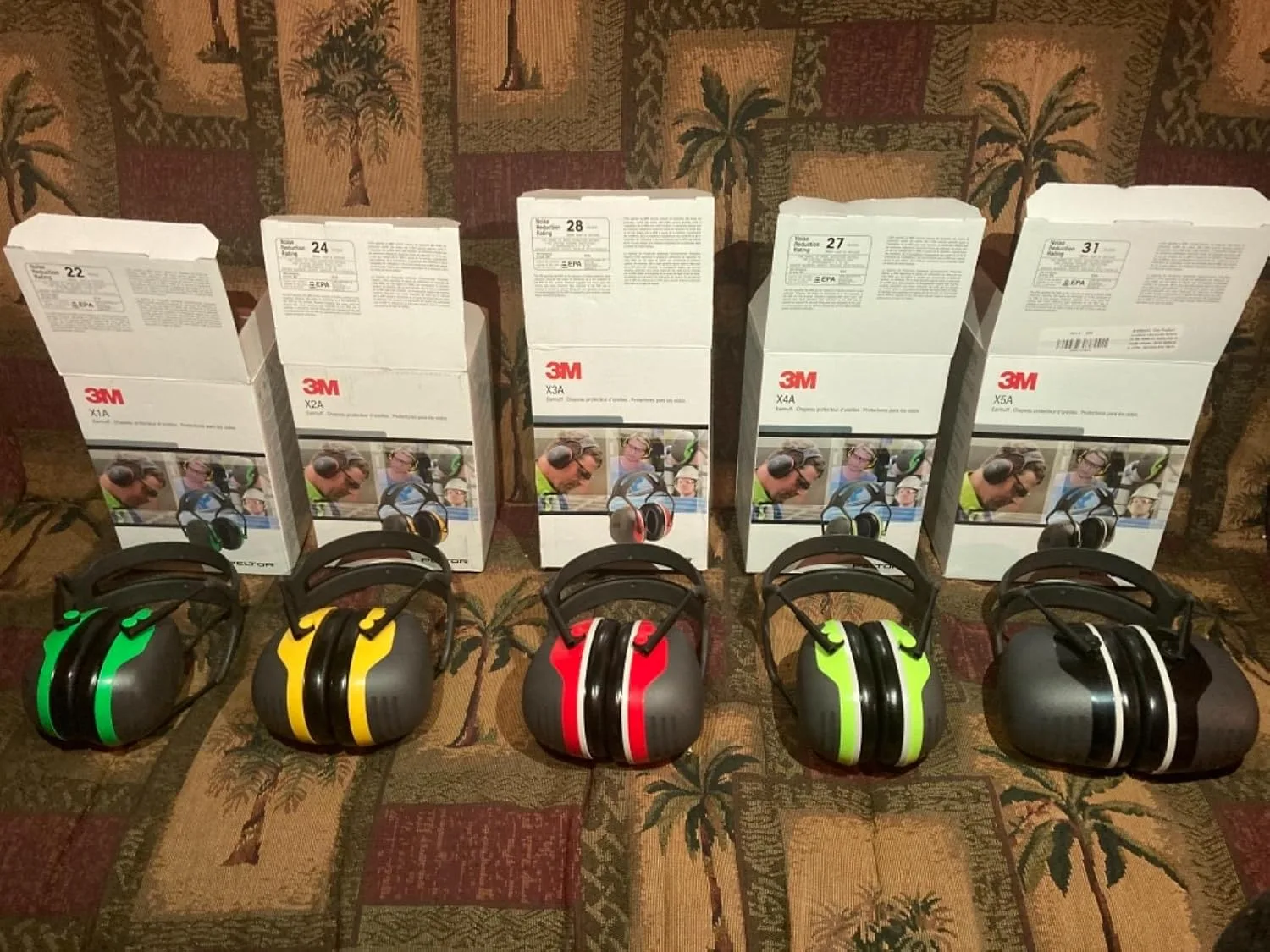
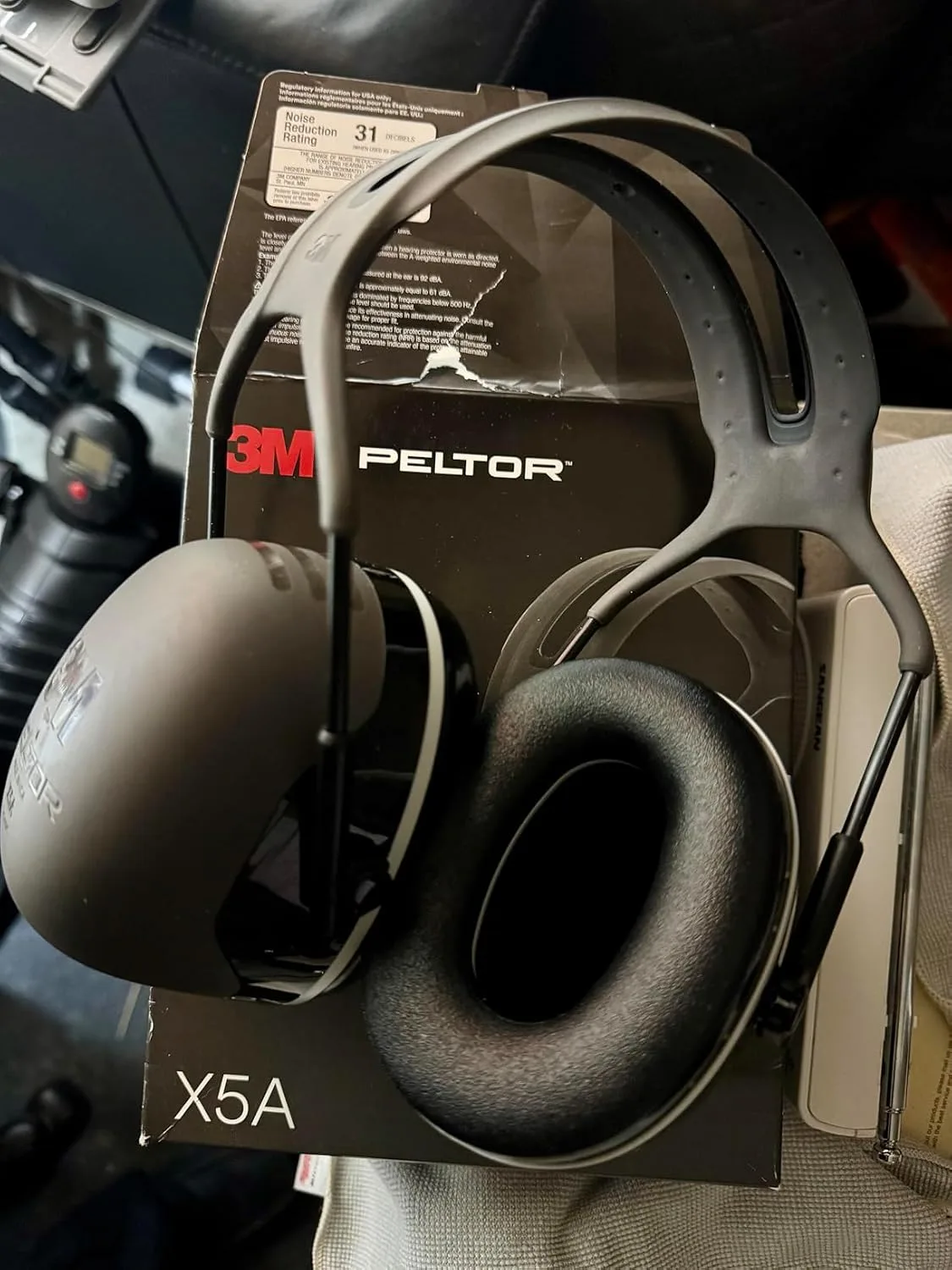
Even premium hearing protection fails if you peel it off because it’s making you miserable. I rely on the 3M PELTOR X4A because it stays seated through long grinding stretches without feeling like a vise on your head. Real comfort matters when you’re switching between grinding, welding, and cutting for most of a weekend.
Where it delivers
- Headband clamps with enough pressure that moving around won’t dislodge the cups, yet your temples don’t throb after wearing them for six hours straight.
- The NRR 27 dB figure covers angle grinder noise, cutting, and general shop clatter — protective without blocking too much ambient sound where you lose awareness of what’s going on nearby.
- The ear cup hinges are sturdy and the overall structure won’t feel brittle when you’re yanking them off and tossing them down between different operations.
Where it falls short
- After roughly two years of steady shop use, the foam surrounding each ear cup flattens out and loses its ability to block noise effectively — you end up buying replacement pads, which gets expensive.
- Eyeglasses create a pressure point where the headband clamps down, and adjusting the tension never completely solves the discomfort.
I bought a cheaper pair first and wore them for three days before the padding fell apart, which meant I was back to working unprotected until these arrived. Don’t make that mistake—grab the 3M PELTOR X Series X4A, NRR 27 dB.



Frequently Asked Questions
How much hearing damage can 15 minutes of grinding cause?
Per NIOSH standards, 100 dB of sound energy for only 15 minutes daily is sufficient to degrade your hearing permanently over months and years. Angle grinders operate in the 100–105 dB range, and repeated short sessions compound into lasting damage even though each feels brief.
What’s the real protection from NRR 27 earmuffs?
NRR 27 earmuffs provide approximately 20 dB of actual protection after applying NIOSH’s 25% reality adjustment. An angle grinder at 103 dB reduces to about 83 dB with these muffs—below NIOSH’s 85 dB threshold—but cheap foam plugs rated NRR 29 only give 14.5 dB of real shielding.
Should I wear earplugs or earmuffs for grinding?
For anything louder than 90 dB, earmuffs eliminate insertion variability and let you pull them on and off quickly between tasks. For extreme exposure like hours at a plasma cutter or continuous air hammer use, combine both plugs and earmuffs over top for maximum attenuation.
How long can I safely work at 100 dB sound level?
At 100 dB, your safe exposure window is 2 hours maximum according to occupational safety standards. Every 5 dB above 90 dB halves your safe exposure time, so 110 dB limits you to 30 minutes.
Sources and further reading
About This Article

Written by Garrett Dunn. Hobbyist metalworker and garage workshop builder. I restore old tools, weld custom furniture, and document my projects and mistakes so other makers can learn from both. More about this site.
Scope and limits. Garrett is a hobbyist metalworker, not a certified welder or machinist. Welding, grinding, and solvent work carry real injury risk — use the correct PPE and ventilation, and follow the manufacturer safety guidance for your own equipment.
Verify this against a primary source
Specifics change, and your situation may differ from the one described here. These are the authorities worth checking directly:
- OSHA — machine guarding, PPE and shop safety standards
- American Welding Society — welding procedure and safety standards